
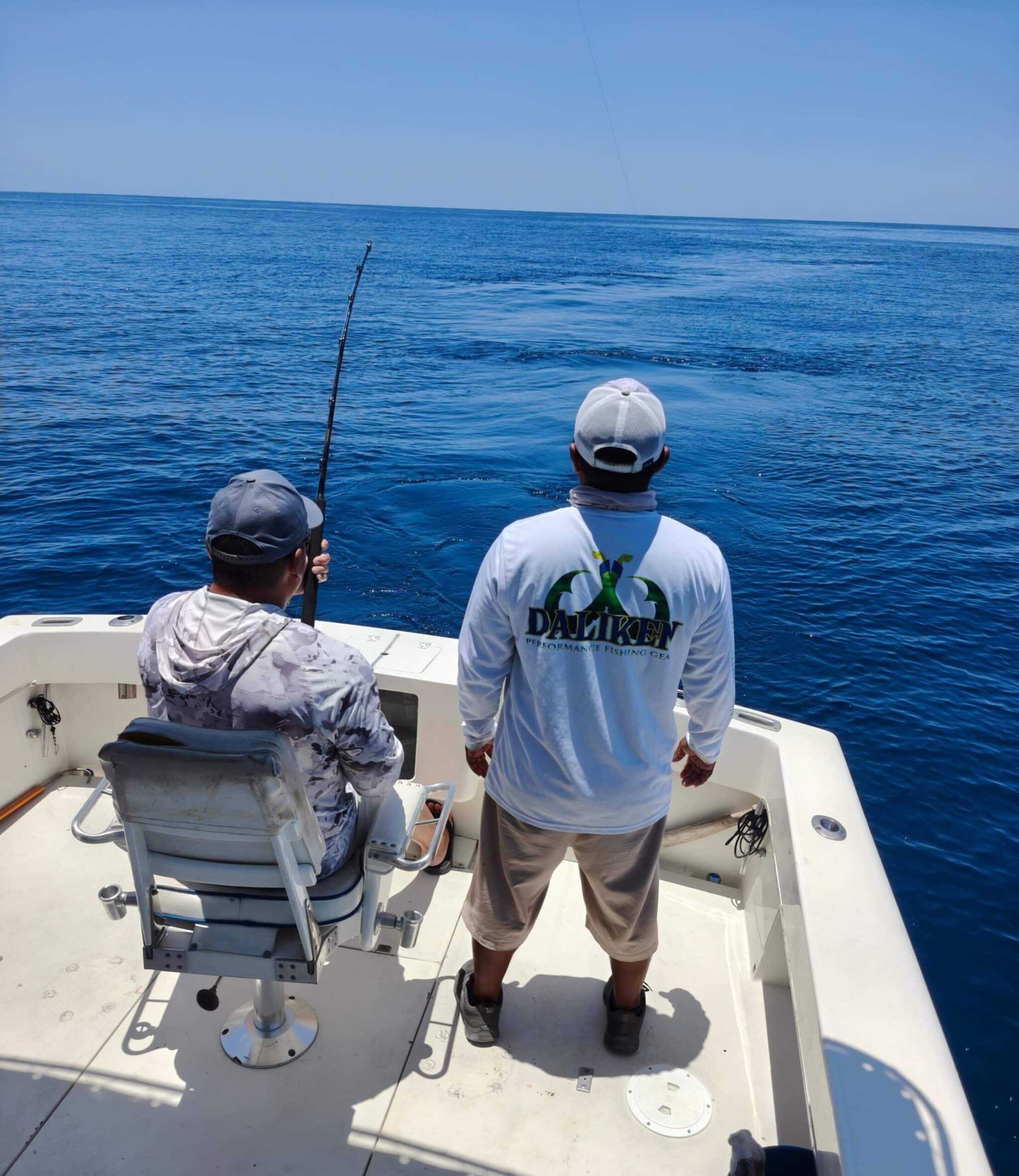
Every Marlin
Swims Again
Our release-first policy on the water off Cabo San Lucas
The marlin is worth more alive than on the scale
When we first fished Cabo in the nineties, nearly every boat came back to port dragging a dead marlin. One after another after another. It took the sportfishing world years to change that culture, and today the standard is clear: billfish are released alive in all but a few tournament situations.
That change did not happen because rules forced it. It happened because we learned better. A marlin that swims away can be caught again, can spawn again, and keeps the fishery alive for the next angler and the next generation. A marlin on the dock is a single photo and a fish that will not feed anyone in a town that already has better seafood on every menu.
The villager who takes one fish a month to feed his family is not the same as a charter hanging a marlin for a picture. We will never pretend the two are the same.
So we release. Boatside, in the water, quickly, and correctly. If a guest wants proof of the catch, we get the shot with the fish still in the ocean where it belongs. That is the whole policy, and we are rigorous about it.
Released marlin survive, when it is done right
This is not a feeling. Decades of satellite tagging and controlled research show that a billfish handled properly has an excellent chance of survival. The details matter.
Post-release mortality when the fish stays in the water. Research from the Virginia Institute of Marine Science found that keeping a billfish in the water during release drops mortality to under two percent.
Mortality when the fish is lifted out for a photo. The same research measured mortality climbing to nearly a third once the billfish is pulled from the water and its gills lose oxygen.
Higher death rate on J-hooks. Studies on white marlin found fish were about twenty times more likely to die on traditional J-hooks than on non-offset circle hooks, which lodge in the corner of the jaw.
Sources: Virginia Institute of Marine Science (Dr. John Graves lab), the International Game Fish Association, and The Billfish Foundation. Figures reflect best-practice release conditions.
Watch a real release
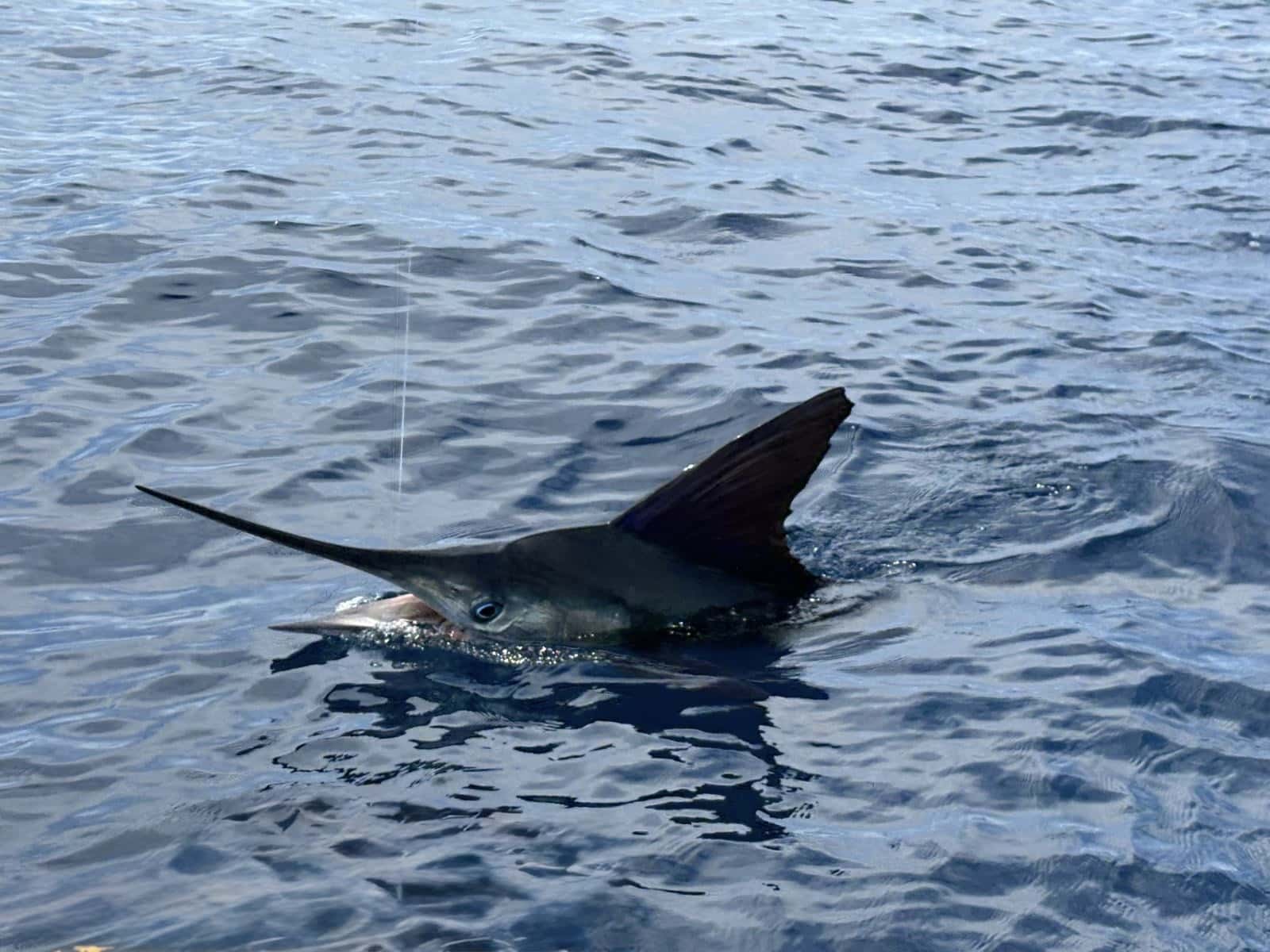
No staging, no dock, no scale. These are marlin swimming off the side of our boat, filmed on our own charters.
How we release a marlin
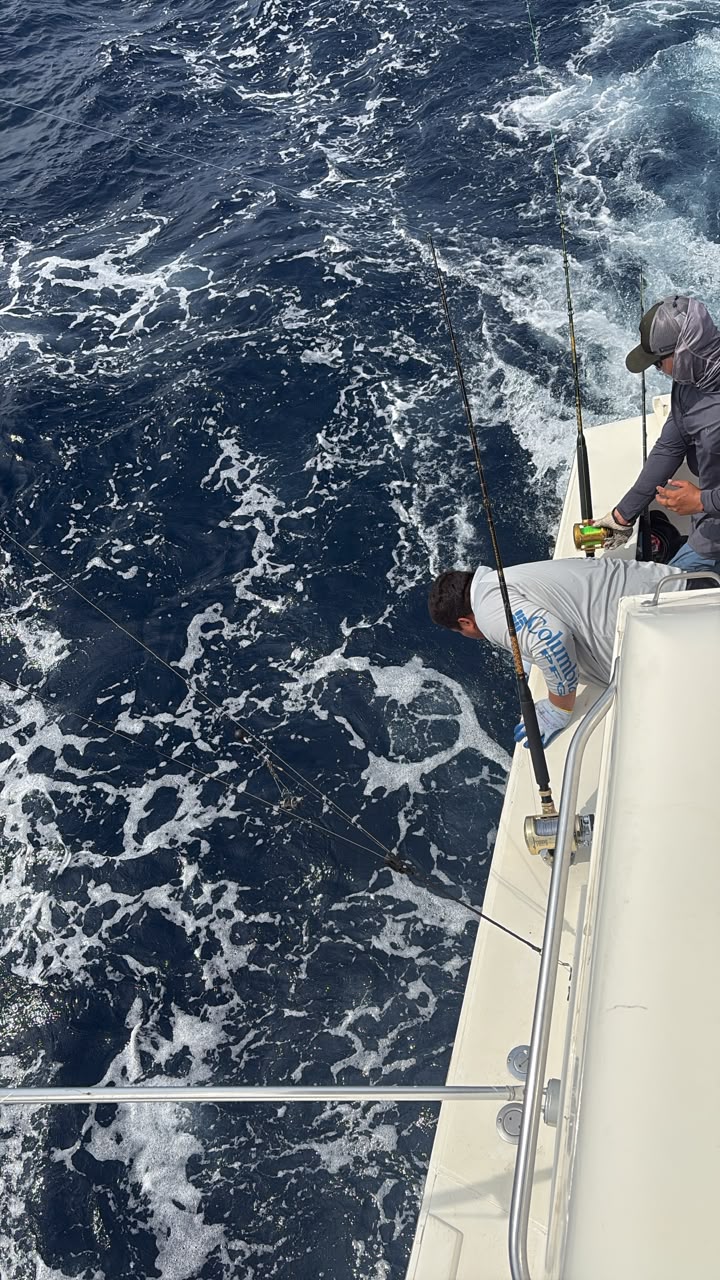
A clean release is a skill, not luck. Our crew works fast and keeps the fish where it can breathe. Here is exactly what we do.
- Non-offset circle hooksThey set in the corner of the jaw, not the gut, so the fish is rarely injured and the hook comes out clean.
- Heavy tackle, short fightThe right line class ends the fight sooner, so the marlin is not exhausted to the point of no return.
- Fish stays in the waterWe lead the marlin to the boat and work the leader with the fish still swimming. It never comes over the rail.
- Revive before letting goIf the fish is tired, we hold it boatside with the boat easing forward so water moves through its gills until it kicks off strong.
There is no food excuse. It is written into the law.
In Mexico, marlin, sailfish and swordfish are among nine species reserved exclusively for sport fishing inside the first fifty nautical miles from shore. Commercial fishing for them there is prohibited.
Selling sport-caught marlin is illegal, and restaurants are not permitted to sell it. A sport angler may legally keep at most one billfish per day, and it counts as five fish against the daily limit. In practice, a well-run charter releases every one.
So the idea that a marlin was taken for food does not hold. There are dorado, tuna and a dozen better options at every table in town. Killing a marlin for a picture is a choice, not a necessity, and we choose not to.
The whole region moved this direction
Cabo is part of a global shift. Country after country has protected billfish, and their fisheries are thriving because of it, not despite it.
Costa Rica
Since 2008, commercial harvest of billfish is banned and sport fishing is release-only by law. It is now one of the world's premier billfish destinations.
Panama and Nicaragua
Commercial trade in billfish is prohibited, and the landing of sailfish and blue marlin is banned outright.
United States
The Billfish Conservation Act makes it illegal to sell billfish, closing the market that once drove the killing.
Guatemala, Belize and Honduras carry billfish conservation measures as well. Costa Rica is not losing tourism over its release rules. It is winning because of them.
The money is moving to release
Look at the tournament numbers. In events like the Bisbee's Black & Blue, the vast majority of billfish are released, often well over ninety-nine percent of them.
Kill divisions now set high minimum weights, a blue or black marlin generally must top three hundred pounds even to qualify, so most fish are simply not eligible to be weighed. Meanwhile the release divisions require the fish to stay in the water, score on release points, and carry growing prize money. The sport's own richest events have decided the future is a living fish.
If the most competitive anglers in the world release nearly everything they catch, there is no reason a vacation charter needs to kill a marlin for a snapshot.
Questions we hear
Do you kill the marlin you catch?
No. On our charters, marlin and other billfish are released alive, in the water, on every trip. We bring the fish to the boat, work the leader, get your photo with the fish still in the ocean, and let it swim off strong.
Is it legal to keep a marlin in Cabo San Lucas?
Mexican law reserves marlin, sailfish and swordfish for sport fishing only, within fifty nautical miles of shore. Selling them is illegal and restaurants may not sell sport-caught marlin. An angler may keep at most one billfish per day, but a responsible charter releases them. We release all of ours.
Does a released marlin actually survive?
Yes, when it is handled correctly. Research shows post-release mortality under two percent when the fish stays in the water and circle hooks are used. Satellite tagging has followed released billfish swimming and feeding normally for weeks and months afterward. The key is keeping the fish wet, ending the fight quickly, and reviving it before release.
Can I still get a photo with my marlin?
Absolutely. We get you a great shot with the marlin right at the side of the boat, in the water, where it belongs. Lifting a billfish out of the water for a picture pushes its mortality up toward thirty percent, so we get the same trophy image without harming the fish.
Why not keep the marlin for food?
Because there is no need. Cabo has dorado, tuna, wahoo and a dozen better eating fish, and every restaurant in town serves them. A marlin taken for a photo is not feeding anyone. Keeping the fishery healthy for the future is worth far more than one dead fish on the dock.
Fish Cabo the right way
Book a charter that fights hard, releases clean, and puts the fishery first. Direct booking with the crew, departing from Puerto Los Cabos Marina.