
Sustainable Fishing
in Los Cabos
A complete guide to responsible sportfishing in San Jose del Cabo: Mexican regulations, the science of circle hooks, marine conservation in the Sea of Cortez, and Daliken's catch-and-release practices.
The waters around San Jose del Cabo sit at the meeting point of the Pacific Ocean and the Sea of Cortez, one of the most biodiverse marine ecosystems on Earth. Protecting this fishery requires more than good intentions. It requires regulations, science-backed gear, and trained crews who release billfish properly and harvest only what makes sense for the table.
Why Sustainable Fishing Matters in Los Cabos
The Sea of Cortez is what Jacques Cousteau called "the world's aquarium." Stretching 750 miles from the Colorado River delta to the southern tip of Baja California, it is the youngest sea on the planet, formed approximately 5.6 million years ago. UNESCO recognizes its 244 islands and coastal areas as a World Heritage Site of striking biological importance.
What is at stake
The Sea of Cortez holds approximately one-third of the world's marine cetacean species and 39 percent of all marine mammal species globally. Over the past several decades, commercial overfishing, the collapse of the sardine industry, and illegal fishing have placed pressure on populations of marlin, sharks, and other apex predators. Sportfishing tourism, when conducted responsibly, generates approximately $500 million annually for Baja California Sur and provides direct economic incentive to protect the fishery.
Every angler who books with us is part of a conservation economy. The healthier the fishery, the better the fishing, year after year. Sustainability is not marketing. It is how the business survives long term.
The local stewardship model
Cabo Pulmo, located on the East Cape approximately 60 miles north of San Jose del Cabo, is one of the most documented examples of marine recovery in the world. After being designated a no-take marine reserve in 1995, total fish biomass increased by over 460 percent in roughly a decade. The reserve demonstrates that targeted protection produces measurable recovery and serves as a model for how sportfishing tourism and conservation can coexist.
Mexican Sportfishing Regulations Explained
Sportfishing in Mexico is regulated by CONAPESCA (Comisión Nacional de Acuacultura y Pesca), the federal fisheries agency. Bag limits, license requirements, and species-specific protections are codified in federal law. Licensed sportfishing operators are required to maintain catch logs that can be audited by authorities. The following are the core rules every angler in Los Cabos should know.
The law allows you to keep one marlin per angler per day. We do not. Daliken releases 100 percent of marlin, sailfish, and (strongly recommends) roosterfish. The fishery is healthier when trophy billfish stay in the water.
Why Circle Hooks Matter for Billfish Survival
The single most important gear change in modern billfish conservation was the transition from traditional J-hooks to non-offset circle hooks. The data behind that transition is substantial and comes from peer-reviewed research conducted over more than two decades.
Dr. John Graves and the VIMS studies
Dr. John Graves, chancellor professor of marine science at the Virginia Institute of Marine Science (VIMS), College of William and Mary, has led much of the modern research on billfish post-release survival. Studies by Graves and his associates found that approximately 65 percent of billfish caught and released on J-hooks survived, meaning roughly 35 percent died within 10 days of release. The cause was typically deep hooking that damaged the gut, gills, or other critical anatomy.
When circle hooks replaced J-hooks in the same fisheries, the hook lodged consistently in the corner of the jaw rather than deep in the throat. Post-release survival improved dramatically. The mechanism is geometric: a circle hook is shaped so it slides out of the throat and rotates into the jaw as the line tightens.
In 2007 the U.S. National Marine Fisheries Service (NMFS) implemented a rule requiring all Atlantic billfish tournament participants to use non-offset circle hooks when fishing with natural bait. The regulation was based on documented improvements in post-release survival from VIMS and IGFA studies.
The 2018 global meta-analysis
The most comprehensive synthesis of circle hook research came from Reinhardt et al. (2018), published in Fish and Fisheries. Their meta-analysis of 42 empirical studies covering pelagic longline fisheries worldwide found that at-vessel mortality was significantly lower with circle hooks for 12 species, including three tuna species, three Istiophorid billfishes (marlin and sailfish family), swordfish, and three shark species.
Catch rate trade-off
Research on the Hawaii-based tuna longline fishery showed that circle hooks reduced catch rates for billfish by 29 to 48 percent compared to J-hooks. This is presented in the conservation literature as a benefit, not a drawback: lower catch rates of overfished species combined with significantly improved survival of released fish equals better long-term population health.
The historical pivot
The shift to circle hooks in recreational sportfishing was pioneered in the 1990s by Captain Peter B. Wright and angler Skip Walton, who first deployed them in the giant bluefin tuna fishery off North Carolina. The practice was then brought to Guatemala by Tim Choate of Artmarina, where his charter fleet adopted circle hooks for billfish before the scientific consensus was settled. The data caught up with the practice.
Daliken's Sustainable Practices on Every Trip
What follows is not a list of feel-good talking points. These are the operational standards on every Daliken charter, every day, regardless of which captain or which boat.
Circle Hooks Standard
Non-offset circle hooks on all natural bait rigs. J-hooks reserved only for specific lure presentations where they outperform.
100% Billfish Release
Every marlin and sailfish is released, regardless of size or species. Roosterfish release is strongly encouraged and standard practice.
Selective Harvest
Only proper-size dorado, tuna, and snapper are retained, within legal limits and only what your group will actually consume.
Equipment and handling protocol
- Dehookers and pliers on every boat for in-water hook removal
- Wet-hand handling only when fish must be brought aboard, to preserve the protective slime layer
- Fish stay in the water for photos whenever possible, especially large marlin
- Barbless option available on request for roosterfish, jacks, and other inshore species
- Minimize fight time with appropriate tackle for the species and conditions
- Revival protocol when fish appear exhausted before release
Operational standards
- Fuel-efficient routing based on real conditions, not unnecessary distance
- Engine off when drifting to reduce emissions and underwater noise
- No chumming near reefs to avoid disrupting reef ecosystems
- Respectful wildlife distance from whales, dolphins, sea lions, and turtles
- Zero trash overboard: all waste returns to the marina
- No coral anchoring: drift fishing over reefs, anchor only in sand or open bottom
Our captains and mates handle billfish releases every working day of the season. The difference between a fish that swims off strong and one that drifts away exhausted is technique, not luck.
Marine Protected Areas Near Los Cabos
Mexico has established 11 marine protected areas (MPAs) within the Sea of Cortez over the past two decades. Several are within reach of San Jose del Cabo. We do not fish inside no-take zones and respect all boundaries marked by Mexican authorities.
Cabo Pulmo National Park
Located approximately 60 miles north of San Jose del Cabo on the East Cape. No-take marine reserve since 1995. Total fish biomass has recovered by over 460 percent. Fully protected; no fishing inside park boundaries.
Cabo San Lucas Marine Park
Established 1973. Protects the iconic Land's End rock formations and surrounding waters. Restricted activities; spearfishing and commercial fishing prohibited.
Loreto Bay National Park
Further north in BCS. UNESCO-recognized. Home to fin whales, blue whales, and significant cetacean populations. Strictly regulated fishing zones.
Where we fish responsibly
Our standard fishing grounds from Puerto Los Cabos Marina are in open ocean waters outside protected zones: the Gordo Banks system (8 to 15 miles offshore), the offshore drop-off (20 to 35 miles), Pacific-side temperature breaks, and the inshore reefs east of the marina. These are productive, legally open fishing zones with healthy populations of pelagic species.
For inshore roosterfish and snook trips, we work the San Jose del Cabo Estuary and East Cape sand beaches with selective gear and strong catch-and-release encouragement, given roosterfish are slow-growing apex predators with limited population resilience to retention pressure.
Species Conservation Status in Cabo Waters
Different species require different management approaches. Here is how Daliken treats the major target species based on their conservation status and population resilience.
Billfish: 100% release
- Blue Marlin (Makaira nigricans): Pacific population considered relatively stable but slow-growing. Release.
- Black Marlin (Istiompax indica): Less common, prized trophy. Release.
- Striped Marlin (Kajikia audax): North Pacific population possibly overfished per ICCAT data. Release.
- Sailfish (Istiophorus platypterus): Pacific population considered healthy but circle hooks essential to maintain it. Release.
Inshore predators: release encouraged
- Roosterfish (Nematistius pectoralis): Slow-growing endemic. We strongly encourage release. Cabo is one of the world's top roosterfish destinations and the fishery only stays that way through release.
- Snook (Centropomus spp.): Estuary populations. Catch and release.
Table fish: selective harvest within limits
- Dorado / Mahi-Mahi (Coryphaena hippurus): Fast-growing, prolific spawners. Excellent table fish. Retain proper-size fish within bag limits.
- Yellowfin Tuna (Thunnus albacares): Premier table species. Retain within legal limits.
- Wahoo (Acanthocybium solandri): Excellent eating. Retain within limits.
- Snapper (Lutjanidae spp.): Multiple species. Retain proper-size fish within limits.
Protected species: never targeted
- Totoaba (Totoaba macdonaldi): Critically endangered. Fully protected.
- Several shark species: Protected status varies by species.
- Sea turtles: All five species in the region are protected.
- Marine mammals: Whales, dolphins, sea lions all fully protected.
How to Properly Release a Billfish
The catch is only half the responsibility. The release determines whether the fish survives. Here is the protocol our captains follow on every billfish release, distilled from IGFA, Billfish Foundation, and decades of working captains' experience.
Keep It Wet
Never lift a large marlin or sailfish fully out of the water. Their body weight unsupported can damage internal organs. Photos from boatside, not on the deck.
Minimize Air Exposure
If a fish must come up briefly for a hook removal or quick photo, every additional second out of water reduces survival probability. Move efficiently.
Cut the Leader Close
If the hook is deep, cut the leader rather than dig for the hook. Modern hooks corrode out within weeks. Internal damage from extraction is far worse than leaving the hook.
Reviving a tired fish
When a fish appears exhausted after a long fight, simply releasing it without revival often results in mortality. Proper revival means holding the fish boatside, head into the current, allowing oxygenated water to flow through the gills until it kicks free under its own power. This can take 30 seconds or several minutes. Patience here directly affects survival rate.
What we do not do
- We do not hang fish vertically by the bill for trophy photos on the dock
- We do not pose with billfish that will be released as if they are dead trophies
- We do not dry-hand large fish (removes protective slime)
- We do not extract deeply lodged hooks; we cut the leader close
- We do not rush a release if the fish needs revival time
Our Eco-Conscious Fleet
Every Daliken boat is rigged with circle hooks, dehookers, and the equipment needed for proper releases. Our captains run fuel-efficient routes and follow the practices documented above on every trip.
23ft Super Panga
Most fuel-efficient option in the fleet. Ideal for inshore roosterfish (release encouraged) and nearshore dorado/tuna trips within legal limits.
26ft Super Panga
Balance of efficiency and offshore range. Perfect for billfish trips (100% release) and selective harvest of dorado/tuna in proper sizes.
28ft Habanero
Offshore comfort with onboard restroom. Full equipment for proper billfish releases including dehookers, revival ropes, and quality circle hook tackle.
What every charter includes: private boat, experienced captain and mate, circle hook tackle, dehookers, water and ice, fish cleaning for retained species. Not included: Mexican fishing license ($20 USD/angler), live bait (varies by day at dock), optional vacuum-pack ($2.50 USD/lb), optional hotel delivery ($20 USD).
Sustainable Practices in Action
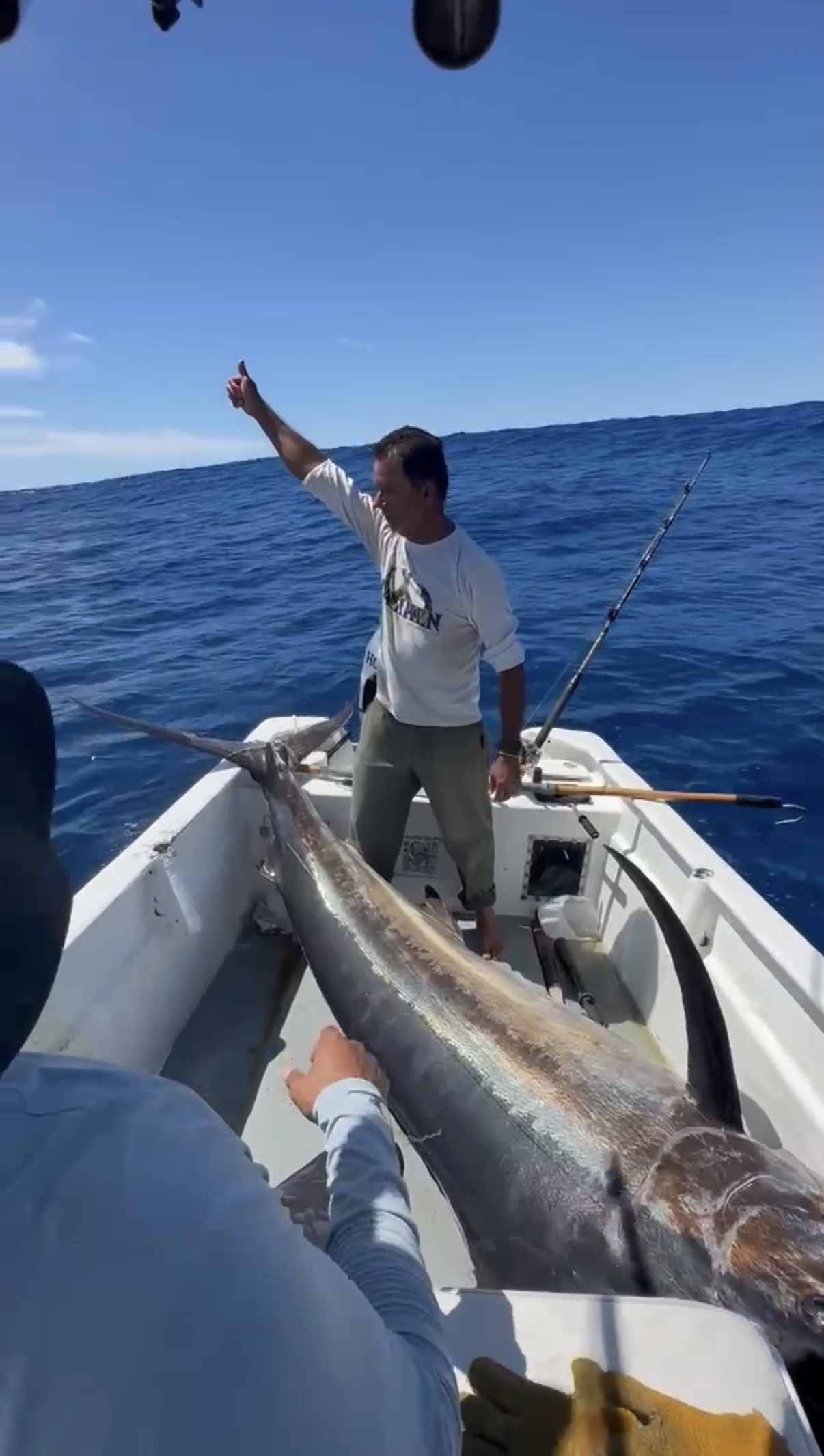
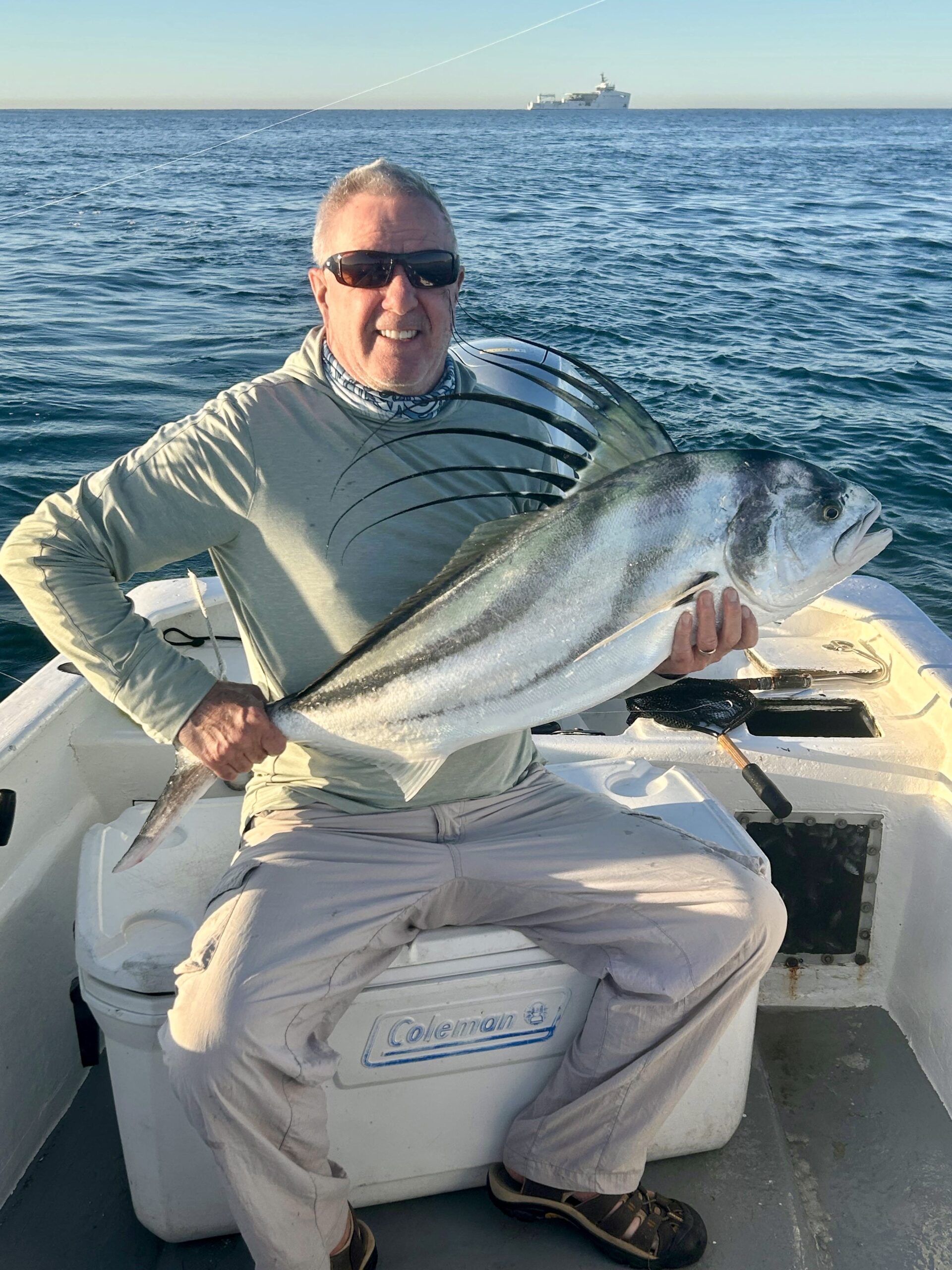
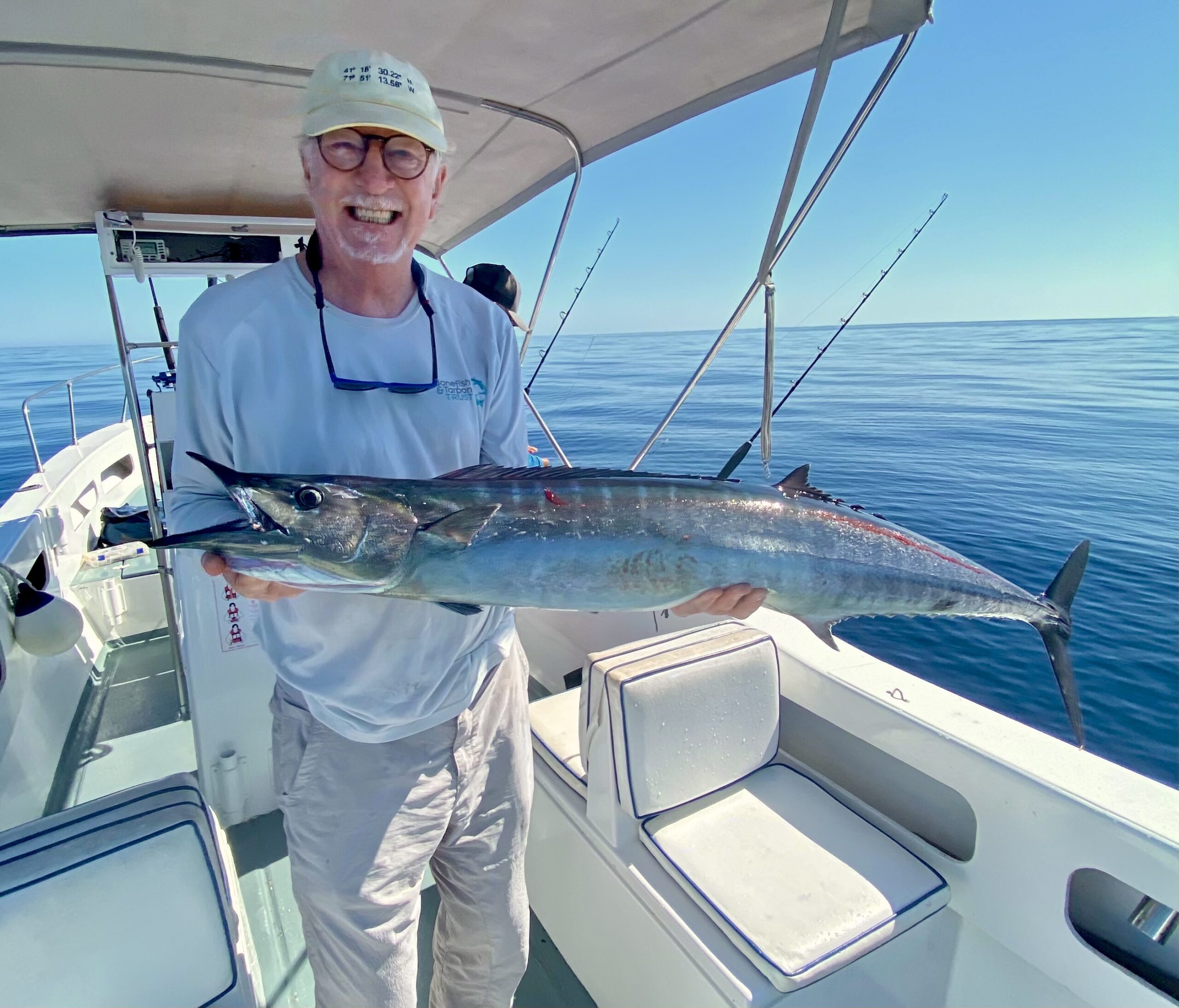
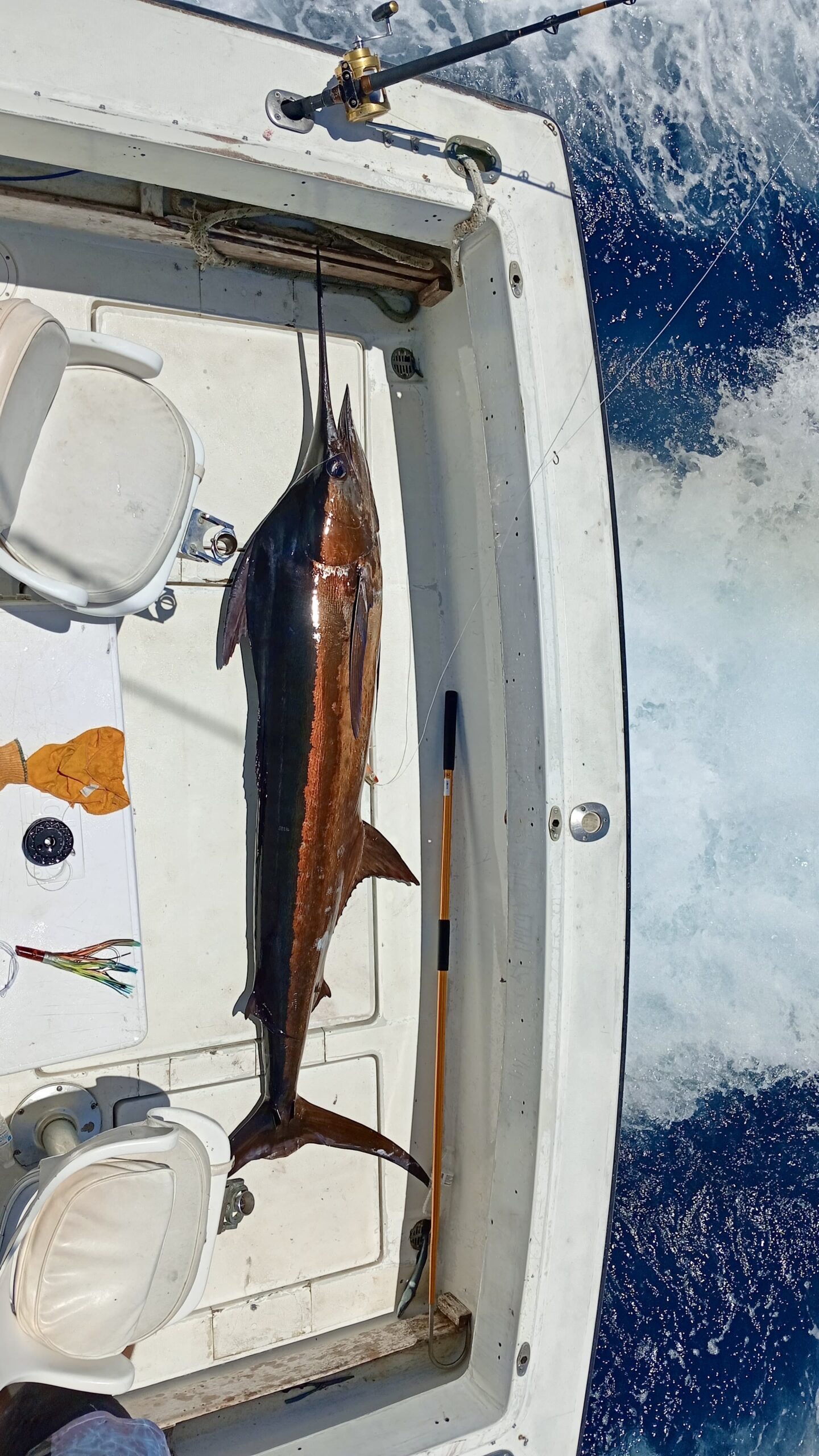
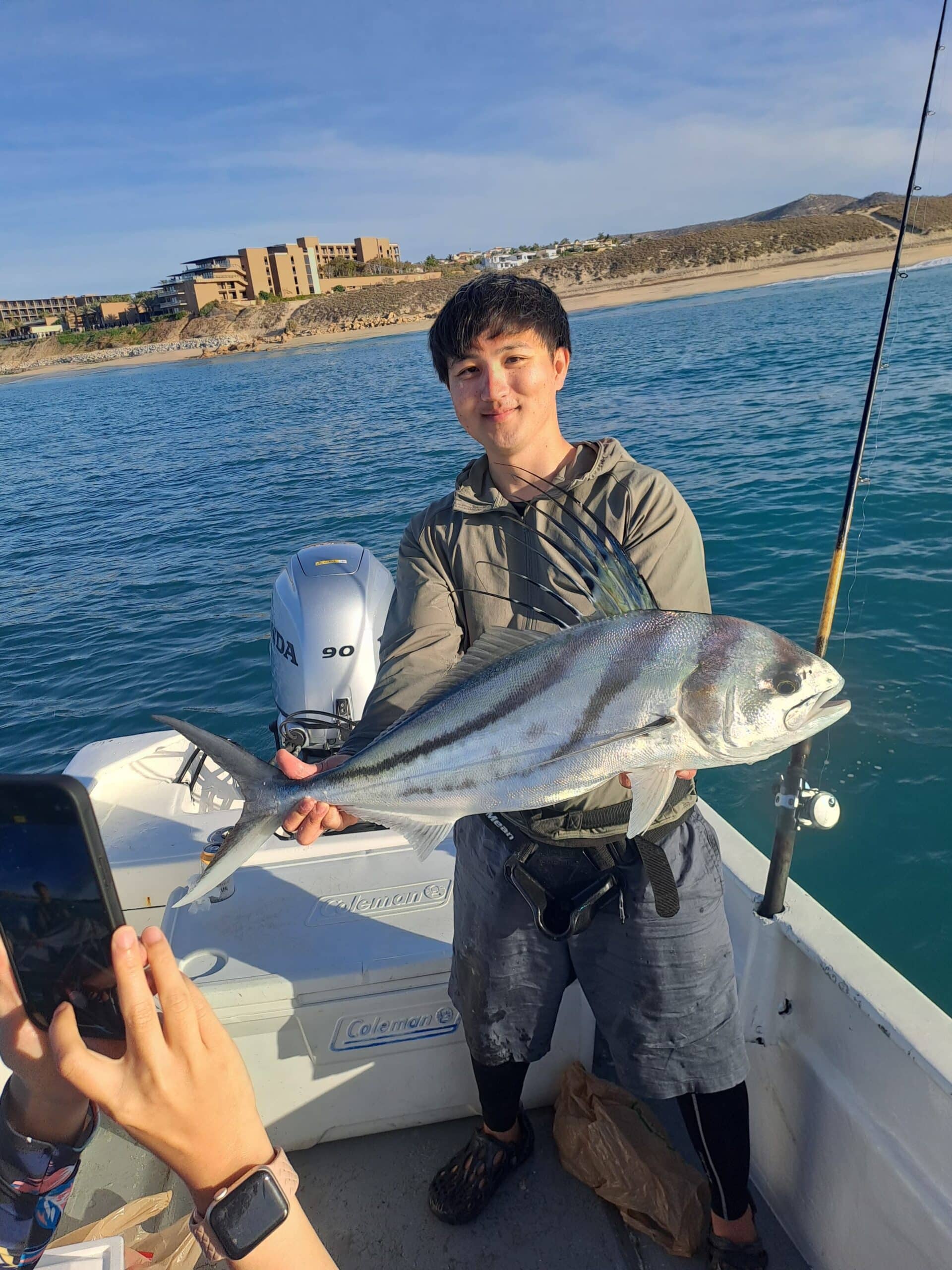
Real photos from Daliken trips showing proper handling, releases, and selective harvest. No stock photography. This is what responsible sportfishing looks like on the water.

Sustainable Fishing FAQ
Why do you release all marlin and sailfish?
Can I keep fish to eat?
What is the daily bag limit in Mexico?
What is a circle hook and why does it matter?
Do I need a Mexican fishing license?
Do you fish inside marine protected areas?
How do you handle release of an exhausted fish?
What if the hook is deep in the fish's throat?
Can you certify a release for IGFA records?
How can I be a more sustainable angler?
- CONAPESCA (Comisión Nacional de Acuacultura y Pesca, Mexico) - Federal fishing regulations
- Dr. John Graves, Virginia Institute of Marine Science (VIMS), College of William and Mary - Billfish post-release mortality studies
- Reinhardt et al. (2018), "Catch rate and at-vessel mortality of circle hooks versus J-hooks in pelagic longline fisheries: A global meta-analysis" - Fish and Fisheries, Wiley
- U.S. National Marine Fisheries Service (NMFS) - 2007 circle hook rule for Atlantic billfish tournaments
- International Game Fish Association (IGFA) - International angling rules and conservation programs
- UNESCO World Heritage - Islands and Protected Areas of the Gulf of California designation
- Mission Blue, Pew Bertarelli Ocean Legacy - Sea of Cortez conservation reporting
Fish Responsibly. Book Direct.
Choose a charter that documents what it does instead of just claiming it. All-inclusive private trips from Puerto Los Cabos Marina starting at $270 USD.