
Best Time to Catch Roosterfish in Cabo – Monthly Guide & Proven Techniques
If you’re planning a trip to Cabo and targeting roosterfish, timing matters. This month-by-month guide shows when they’re most active, where to look, and what techniques work best.
Quick Answer (Featured Snippet Style)
The best time to catch roosterfish in Cabo is during the warmer months when baitfish push tight to the beach.
Your odds jump on days with clean water, stable weather, and visible bait along beaches and rocky points.
Roosterfish by Month in Cabo
Use this as a practical “when to go” map. Conditions vary, but this pattern stays consistent year to year.
| Season / Months | What to Expect | Best Approach |
|---|---|---|
| Winter Dec–Feb |
Less consistent. You can still see fish when bait shows up, but expect shorter “windows.” | Slow troll live bait + short casting sessions when activity pops. |
| Spring Mar–May |
Transition period. Water warms, bait increases, and consistency improves. | Mix live bait close + casting lures/flies when fish show. |
| Summer Jun–Aug |
Peak potential when bait is thick and conditions stay stable. | Casting first (surface signs) + keep live bait ready. |
| Fall Sep–Nov |
Outstanding—especially on stable days with clean water and bait. | Follow bait pockets: beach → point → current edge (fast moves). |
Winter
Dec–Feb
What to Expect
Less consistent. Still possible when bait shows up, but feeding windows are shorter.
Best Approach
Slow troll live bait + short casting sessions when activity pops.
Spring
Mar–May
What to Expect
Water warms and bait increases. Consistency improves as the season builds.
Best Approach
Mix live bait close + casting lures/flies when fish show.
Summer
Jun–Aug
What to Expect
Peak potential when bait is thick and conditions stay stable near the beach.
Best Approach
Casting first (surface signs) + keep live bait ready.
Fall
Sep–Nov
What to Expect
Often outstanding—especially on clean water days with visible bait.
Best Approach
Follow bait pockets: beach → point → current edge (fast moves).

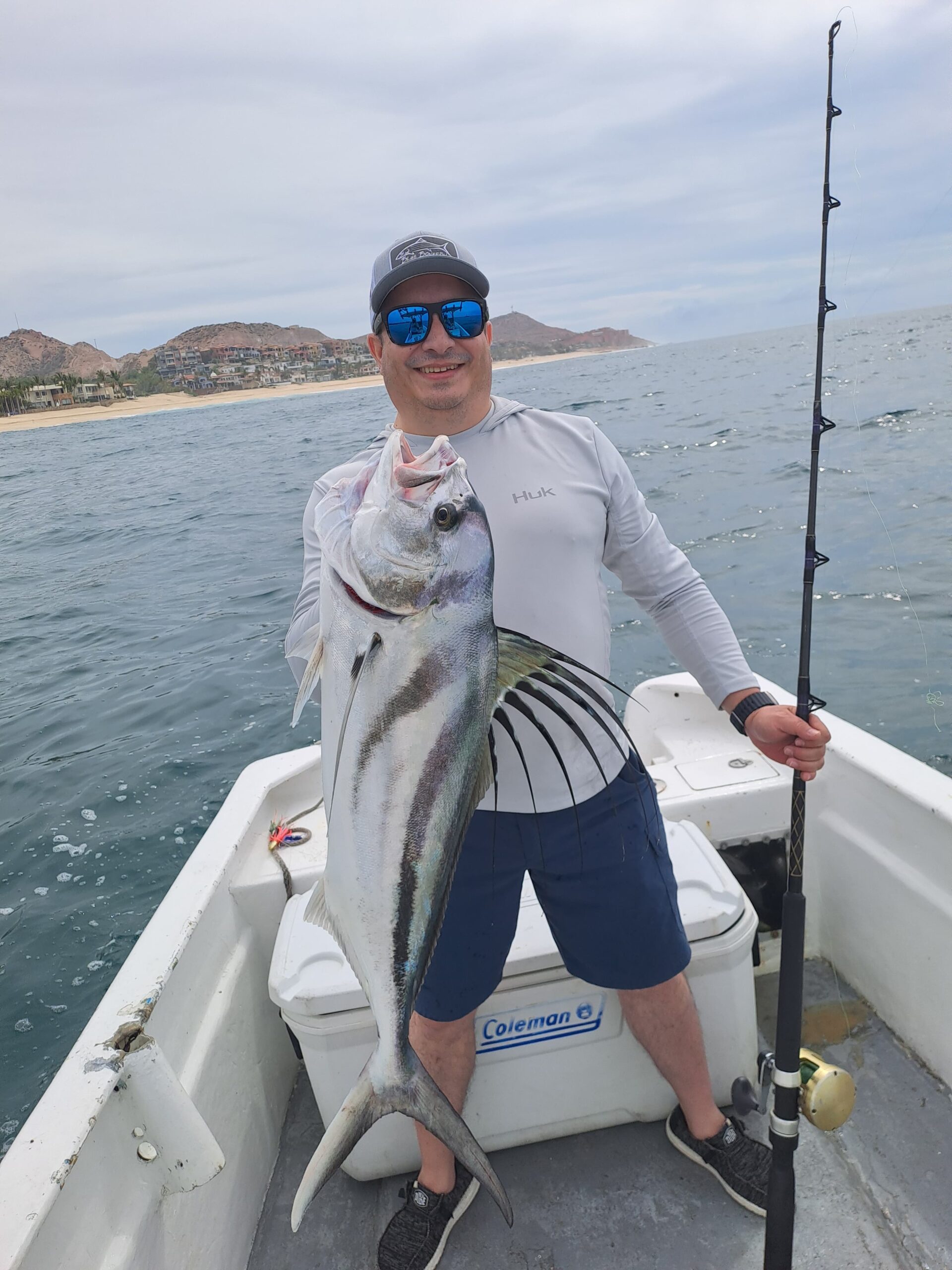
Best Techniques (What Works When It Matters)
- Live bait close to shore: Slow-troll along beach edges and points when fish aren’t showing on top.
- Casting to surface signs: When you see bait sprays, boils, or birds—cast first, then follow with live bait.
- Fly & light tackle: Best when water is clean and fish are cruising the beach line.
- Local positioning: Correct angle matters—private charters adjust zones fast (beach → point → pocket).
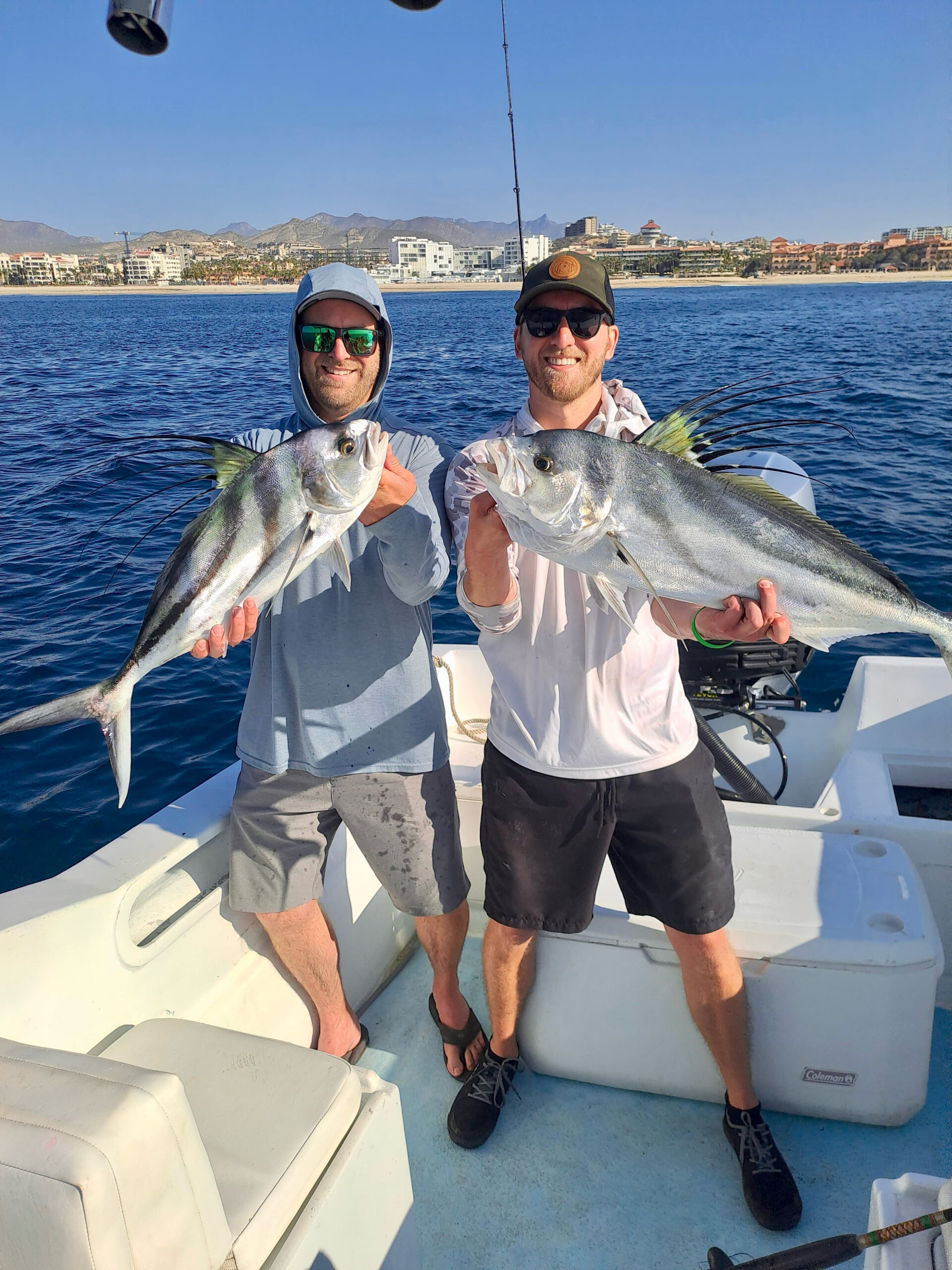

Why Timing Matters for Roosterfish
Roosterfish follow food. When bait moves, roosterfish move. That’s why the same beach can be quiet one day and “on fire” the next. The biggest difference is usually not luck — it’s water clarity, bait presence, and local decisions.
- Water clarity: Cleaner water improves sight-feeding and casting success.
- Stability: Stable weather patterns usually produce longer feeding windows.
- Local decisions: Private charters can switch zones fast (beach → point → pocket) to stay on fish.
Need Transportation?
We offer trusted private transportation at better prices than taxis. Send your hotel name and we’ll arrange pickup.
Frequently Asked Questions
What month is best for roosterfish in Cabo?
Summer and early fall are typically the strongest months due to warm water and consistent bait close to shore.
Can roosterfish be caught year-round?
Yes, but consistency varies. Warmer months usually provide much higher chances and longer feeding windows.
Are roosterfish caught close to shore?
Yes. Roosterfish are inshore predators commonly found along beaches, rocky points, and current edges.
What’s better: live bait or casting lures?
Both work. We often cast first when fish show, then switch to live bait if the bite slows or fish go deeper.