
Marlin Grand Slam
Cabo Guide
The complete guide to the most prestigious achievement in offshore sportfishing: catching three or more billfish species in a single day. IGFA slam definitions, the five Cabo billfish species, seasonality, tactics, and how Daliken targets slam days.
"In the world of big game fishing, few accomplishments rival a Grand Slam."
A Marlin Grand Slam is the achievement of catching three different billfish species in a single calendar day. It is the most prestigious accomplishment in offshore sportfishing, recognized by the IGFA, The Billfish Foundation, and major tournaments worldwide. Los Cabos is one of only three places on Earth where the convergence of species, season, and conditions makes a Grand Slam realistically achievable on a charter boat.
What Is a Billfish Grand Slam?
A billfish "slam" is a recognized sportfishing achievement defined by the International Game Fish Association (IGFA) and adopted globally as the benchmark for multi-species billfish days. The base achievement, the Grand Slam, requires the angler to legally catch (and typically release) three different billfish species in a single calendar day from the same boat.

A blue marlin, one of the five billfish species that constitute the Pacific slam roster. In Los Cabos, this is often the foundation species of any slam attempt during summer months.
Why slams matter
Grand Slams matter for three reasons. First, they require everything to go right: weather, water temperature, fish migration timing, captain decisions, angler skill, and pure luck. Second, they demonstrate mastery of multiple techniques because each species requires different tactics. Third, they are exceptionally rare even in the best destinations, which makes the achievement permanent: anglers who complete one talk about it for the rest of their lives.
Slam variations: Grand, Super, Fantasy, Royal
The IGFA recognizes four progressive billfish slam achievements, each requiring more species than the last. We cover the full definitions in the next section, but understanding the hierarchy helps frame what is possible in Cabo waters. A Grand Slam (3 species) is achievable on a focused day. A Super Grand Slam (4 species) is rare but possible. A Fantasy Slam (5 species) requires perfect conditions and luck. A Royal Slam crosses multiple oceans and is a multi-year pursuit.
Los Cabos is one of the few destinations where five distinct billfish species (blue marlin, striped marlin, black marlin, sailfish, and shortbill spearfish) all occur in the same waters during overlapping seasons. This biological convergence is what makes Cabo a top-tier slam destination.
The Four Billfish Slams Explained
The IGFA maintains the formal definitions and recognition of billfish slam achievements. Each level represents a quantum leap in difficulty, and each is awarded with formal IGFA recognition when properly documented.
The foundation achievement. Three different billfish species caught and released (or kept legally) in a single calendar day from the same boat. Realistically achievable in Cabo during peak summer season.
The next level. Four different billfish species in one day. Rare but possible in Cabo waters when blue, striped, sailfish, and a black marlin or shortbill spearfish align. Genuine accomplishment.
The aspirational target. All five Pacific billfish species (blue, striped, black, sailfish, shortbill spearfish) in one day. Extraordinarily rare anywhere on Earth. Cabo is one of few realistic locations.
The lifetime achievement. All billfish species occurring in a given ocean (Pacific, Atlantic, Indian) caught over time. Multi-year pursuit. The IGFA Pacific Royal Slam includes seven species.
What counts as a slam
For a billfish slam to be recognized, certain standards apply. The fish must be caught and either released alive or kept legally within IGFA and local regulations. Multiple anglers on the same boat each have their own slam status; one angler catching one species and a different angler catching two does not constitute a slam for either. The fish must be caught between sunrise and sunset (or within an extended definition of "calendar day"). Documentation through photos, captain testimony, or formal IGFA application is recommended for official recognition.
The species count
For slam purposes, the recognized Pacific billfish species are: Blue Marlin (Makaira nigricans), Striped Marlin (Kajikia audax), Black Marlin (Istiompax indica), Sailfish (Istiophorus platypterus), and Shortbill Spearfish (Tetrapturus angustirostris). All five occur in Cabo waters, though black marlin and shortbill spearfish are notably rarer than the other three.
Sailfish counts as a billfish species for slam purposes despite being technically distinct from marlin. Swordfish (Xiphias gladius) is also a billfish but is not generally included in slam roster definitions because it is rarely caught recreationally during daylight hours.
The Five Billfish of Los Cabos
Five distinct billfish species inhabit the waters around Los Cabos, making the destination uniquely positioned for slam attempts. Each species has its own preferred conditions, depth ranges, and seasonal patterns.
Blue Marlin
The largest billfish in Cabo waters. Pacific blue marlin push into the region during summer months following warm water and skipjack tuna prey. Trophy specimens over 500 lb are landed each year. Cornerstone species for any summer slam attempt.
Striped Marlin
The most abundant billfish in Pacific Mexico and the species that built Cabo's sportfishing reputation. Striped marlin concentrate in feeding aggregations during winter when sardine and mackerel schools push into shallow water. Frequently caught in double-digit days during peak season.
Pacific Sailfish
Acrobatic, fast-running billfish renowned for spectacular surface displays. Sailfish travel in groups and respond aggressively to teasers and live bait. Cabo sailfish are typically smaller than Central American averages but are common during summer months and a key slam target.
Black Marlin
The rarest of the regularly-caught Cabo billfish and the trophy species. Black marlin in Cabo waters typically appear during summer months but are less predictable than blues or sailfish. A black marlin in a slam attempt elevates the day from Grand Slam to Super Grand Slam territory.
Shortbill Spearfish
The smallest and rarest of Cabo billfish. Shortbill spearfish are typically caught incidentally rather than targeted, but they count toward Super Grand Slam and Fantasy Slam achievements. Any spearfish caught during a slam attempt is a stroke of significant luck.
Why Cabo Is a Top Global Slam Destination
Only a handful of locations worldwide give anglers a realistic shot at a Grand Slam on a charter trip. Los Cabos sits in the top tier alongside Pinas Bay in Panama and Bermuda for blue marlin specifically. Three factors put Cabo on this short list.
Reason 1: The biological convergence
The southern tip of Baja California sits at the meeting point of two major ocean systems. The cold, nutrient-rich Pacific brings striped marlin and big yellowfin tuna during winter. The warm Sea of Cortez attracts blue marlin, sailfish, and black marlin during summer. Cabo is one of the few destinations where this overlap creates months where multiple billfish species share the same water.
Reason 2: The 13 productive fishing spots
Within 70 miles of Puerto Los Cabos Marina, anglers can choose from 13 distinct productive fishing zones (Gordo Banks, Iman, Golden Gate, San Jaime, East Cape spots, and more). A slam-focused captain can plan a route that maximizes exposure to different species in different water types within a single day. See our complete Los Cabos fishing spots guide for all 13 zones.
Reason 3: Year-round operational capability
Cabo's weather permits offshore fishing nearly every day of the year. Unlike destinations with hurricane closures or rough winter seasons, the productive Cabo months span all four seasons. This gives anglers multiple windows per year to attempt slam achievement.
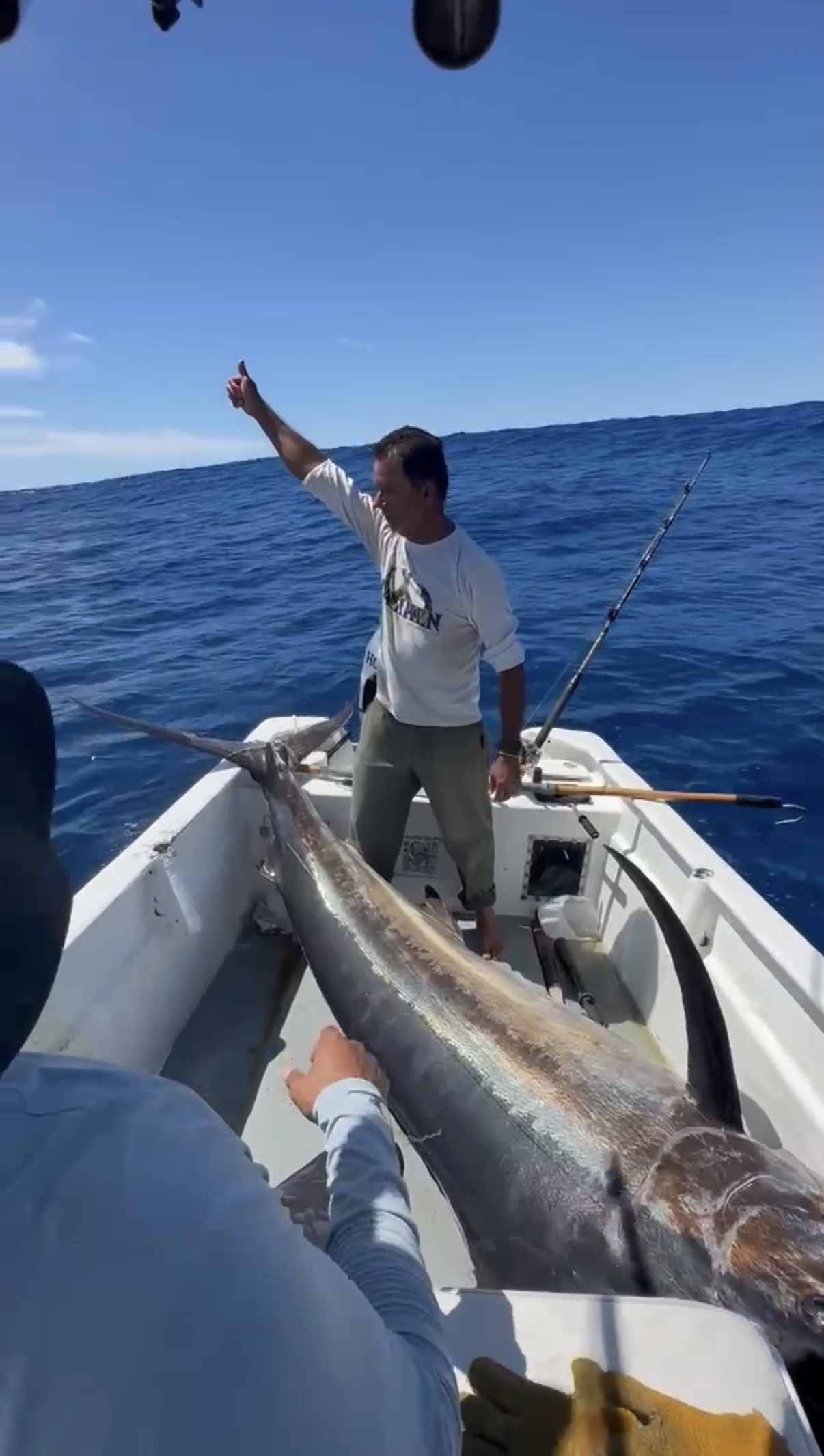
A blue marlin released boatside on a Daliken charter. Cabo's combination of multiple species access, year-round operability, and short runs to productive water creates conditions where slam attempts become viable in ways most destinations cannot match.
Best Season for a Cabo Grand Slam
Slam attempts succeed when multiple species overlap in the same waters at the same time. The calendar below shows when each Cabo billfish species peaks, with the slam-optimal months marked in the third row.
The optimal window: June through October
The five-month window from June through October is when blue marlin, sailfish, and striped marlin all overlap with reasonable consistency in Cabo waters. June through August also offers the best chance at black marlin and shortbill spearfish appearances. If you are planning a trip specifically targeting a slam, book during this window.
Winter slam attempts (December-March)
Winter slam attempts are difficult because blue marlin and sailfish migrate south or push deep, leaving primarily striped marlin in the region. A winter "slam" most commonly involves striped marlin plus an occasional sailfish plus other species like dorado or wahoo, but a true billfish Grand Slam (three billfish species) is statistically unlikely.
The shoulder seasons (April-May, November)
Shoulder seasons can produce slams when conditions cooperate. April-May is when blue marlin begin returning to Cabo waters while striped marlin are still present. November is the reverse: blue marlin still around as striped marlin push back in. These transition periods can be excellent if you hit the right week.
The Tactical Approach to a Slam Day
A Grand Slam does not happen by accident. It happens when a captain plans the day around multi-species opportunity, the right gear is rigged, and the angler executes when each species presents. Below is the tactical framework Daliken uses on dedicated slam-focused charters.
Multi-Zone Routing
Plan the route to cover different bottom structure, temperature breaks, and depth ranges. Outer Gordo for blue marlin, edges for sailfish, deeper drop-offs for opportunity species. Move between zones based on bites.
Mixed Spread
Run multiple bait types simultaneously: small natural baits (ballyhoo) for sailfish, larger live baits (skipjack, bonito) for blue marlin, teasers to raise fish to the spread. The mix increases multi-species probability.
Quick Release Discipline
Release each fish as fast as possible to maximize remaining fishing time. Long fights, photo sessions, and gear repairs eat into the day. Efficient release lets you keep working other species while the window is open.
Starting strategy: target the rare ones first
The conventional slam wisdom is to target the rarest species first, when crew energy and time are highest. In Cabo, this typically means starting at zones likely to produce black marlin or shortbill spearfish (deep Outer Gordo, Pacific bank edges), then moving to bluewater for blue marlin opportunity, then finishing in shallower or edge waters for sailfish.
Gear strategy: balance for all species
Rigging tackle that can handle blue marlin (50-80 lb class) but also catch sailfish efficiently (30-50 lb class) requires compromise. Most slam-focused boats run 50 lb class rods on the bigger baits and 30 lb on the smaller. Circle hooks throughout. Standard billfish leaders (200-400 lb for marlin, 80-130 lb for sailfish/spearfish). See our complete circle hooks guide for billfish for technical detail.
The captain's role: reading conditions
A slam captain spends the day reading bird activity, temperature changes, bait schools, and slick lines. The decision of where to run next is based on what is happening RIGHT NOW, not on a pre-planned itinerary. Slam days are won by captains who adapt in real-time.
For clients specifically requesting a slam-focused day, we configure the trip differently: longer day (10-12 hours), Habanero 28ft for range, mixed bait load, multi-zone routing, dedicated mate focus on quick releases. Discuss your slam goals with Austin at booking so we can plan appropriately.
Cabo Slams in Sportfishing History
Los Cabos has produced billfish slams since the modern sportfishing era began in the region in the 1950s-60s. The combination of multiple species, accessible waters, and growing charter infrastructure created an environment where slam achievements became more common over time, even as they remained rare globally.
The early decades (1950s-1970s)
The first documented slam achievements in Cabo waters came from anglers fishing aboard private yachts and the early commercial charter operations operating out of the original Cabo San Lucas harbor. Hotel Hacienda, Hotel Cabo San Lucas, and Las Cruces operations brought serious anglers to the region. The convergence of blue, striped, and sailfish species was well-known among the dedicated big-game community even before infrastructure made Cabo accessible to mainstream sportfishing.
The tournament era (1980s-present)
The launch of Bisbee's Black & Blue Tournament in 1981 and other major tournaments brought professional-level slam attempts to Cabo. Tournament logs documented multiple slam achievements per season during peak summer months. The growing fleet of professional captains and the development of better tackle, electronics, and techniques pushed slam achievement rates higher.
The modern slam culture
Today, IGFA-recognized slam achievements in Cabo are documented annually. The Billfish Foundation tracks slam attempts and successes globally. Cabo consistently ranks among the top destinations for confirmed slam achievements alongside Pacific Mexico's other premier ports and select Central American destinations.
How Daliken Targets Slam Days
Daliken Sportfishing has hosted clients pursuing slam achievements during peak summer seasons for years. When a client books specifically for a slam attempt, we restructure the trip around that goal rather than running a standard charter.
The slam-focused booking
- Boat selection: 28ft Habanero for range, stability, and ability to reach Pacific banks if needed
- Trip length: extended day (10-12 hours) rather than standard 8-hour charter
- Bait load: mixed live and dead baits sized for multiple species
- Tackle setup: balanced spread covering 30 lb to 80 lb class
- Routing: multi-zone strategy planned by Captain Pancho based on recent intelligence
- Mate focus: dedicated efficient releases to maximize fishing time
What we cannot promise
No reputable operator can guarantee a slam. The achievement requires species cooperation that is fundamentally outside human control. What we can promise is the best preparation, the best routing, and the best technical execution to maximize the probability when conditions are favorable.
Documentation and recognition
If you achieve a slam aboard our boat, we will document the day with photos, GPS logs, and captain testimony as needed for IGFA submission or personal records. The Billfish Foundation also recognizes slam achievements with formal certificates. Daliken supports our clients through this documentation process.
Tell Austin at booking that your trip is slam-focused. We will discuss target months, boat availability, extended trip duration, and pricing. WhatsApp Austin to discuss your slam goals.
Realistic Slam Expectations
One of the most important things any angler can do before a slam attempt is calibrate expectations against reality. Slams are rare achievements even in the best destinations during the best seasons. Understanding the statistics helps you appreciate the achievement if it happens and avoid disappointment if it does not.
Approximate slam probability by season
- Peak summer (July-September): A focused boat with experienced captain might achieve 1 Grand Slam per 8-15 dedicated slam-focused trips. Super Grand Slams remain exceptional, perhaps 1 per 50-100 attempts
- Shoulder seasons (May-June, October): Reduced probability, perhaps 1 Grand Slam per 15-25 attempts
- Winter (November-April): Grand Slams essentially impossible due to species absence; "winter slams" typically involve non-billfish species and do not qualify
What success actually looks like
On a slam-focused day in peak season, success typically involves: 5-10 billfish raised, 3-6 hooked, 2-4 brought to release. From those releases, sometimes the species lottery delivers three different species and you have a Grand Slam. More commonly, you might release 4 striped marlin and a sailfish (impressive day, not a slam). The achievement of three different species on one trip is what makes the slam meaningful.
The mindset
Approach a slam trip as a focused attempt at a rare achievement, not as a guaranteed outcome. The journey of the day, the chase, the variety of techniques, the moments when conditions almost align, are the experience. The slam itself, when it comes, is the payoff for showing up prepared.
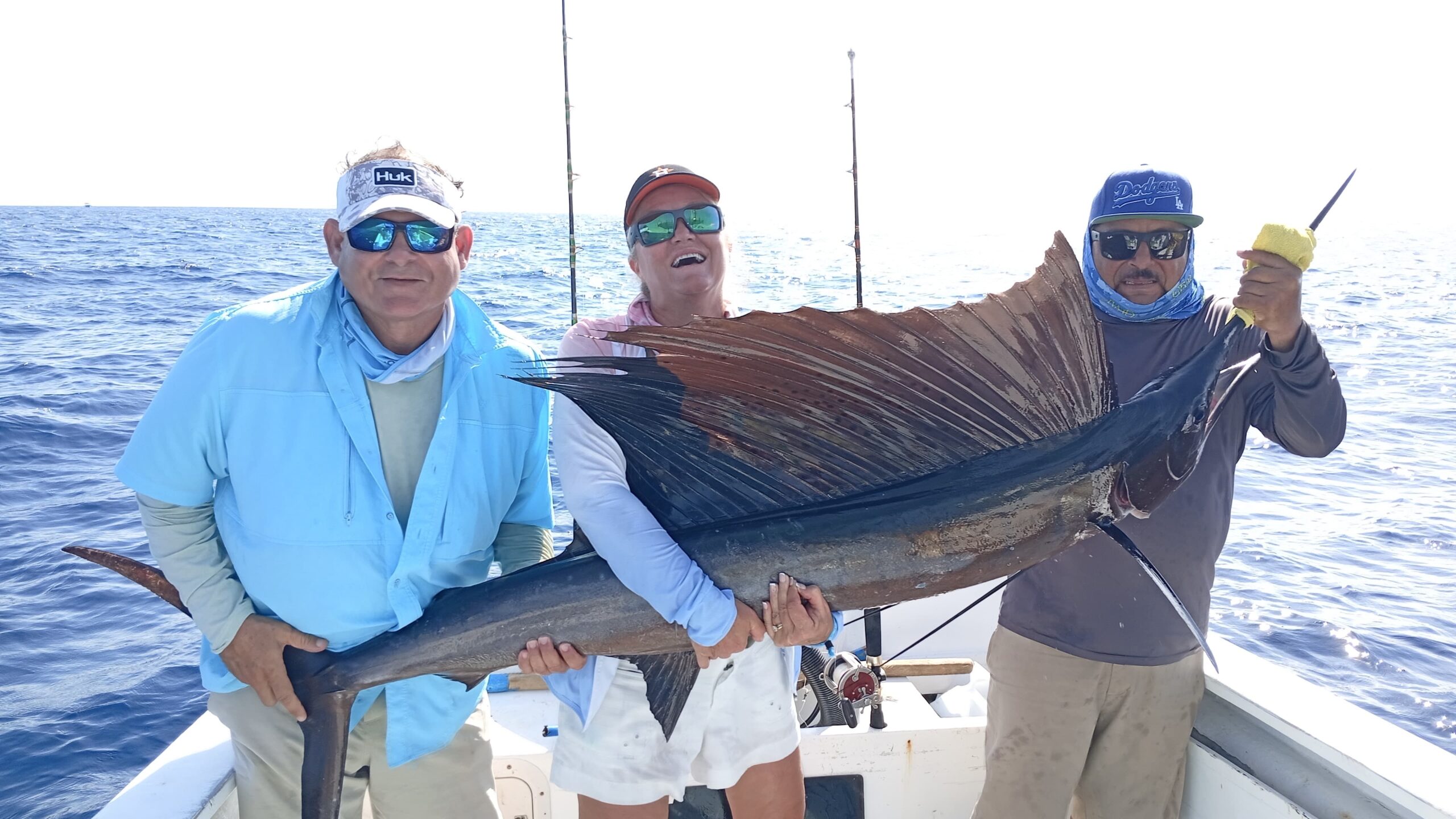
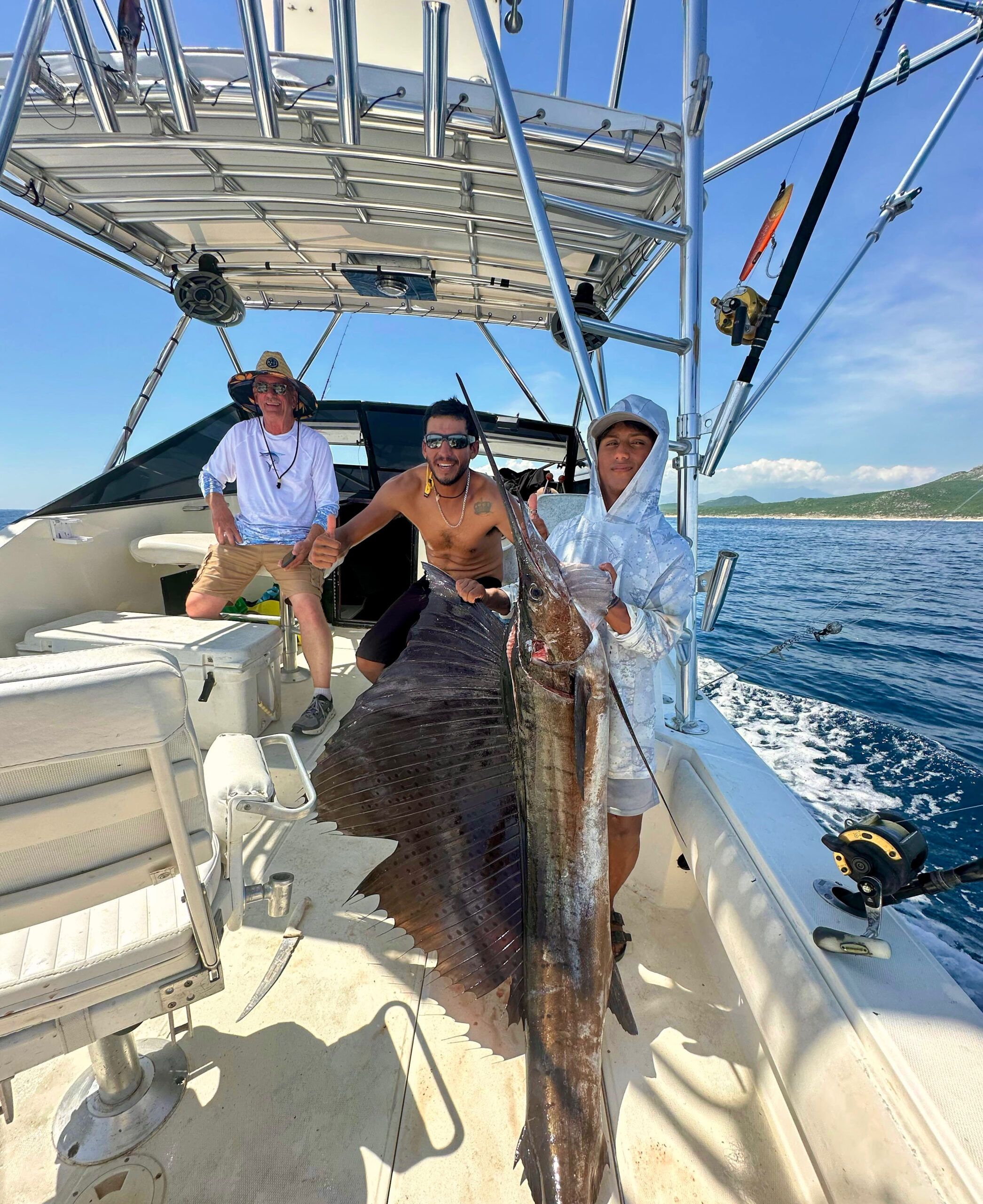
A sailfish released on a Daliken charter. Whether or not the day produces a slam, the experience of pursuing multiple billfish species in Cabo's productive waters is the achievement that makes the trip worthwhile.
Cabo Billfish: Real Daliken Releases
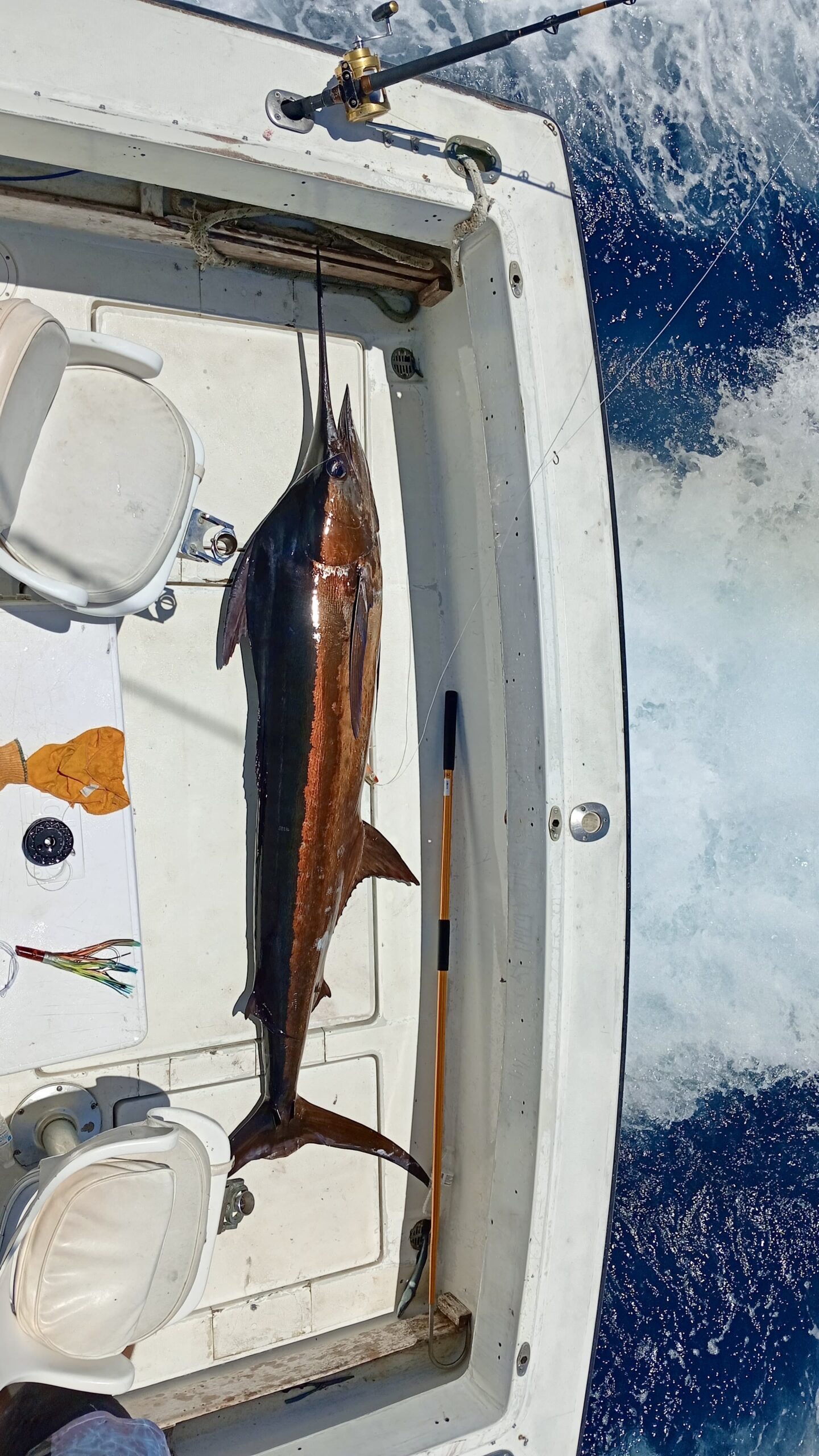
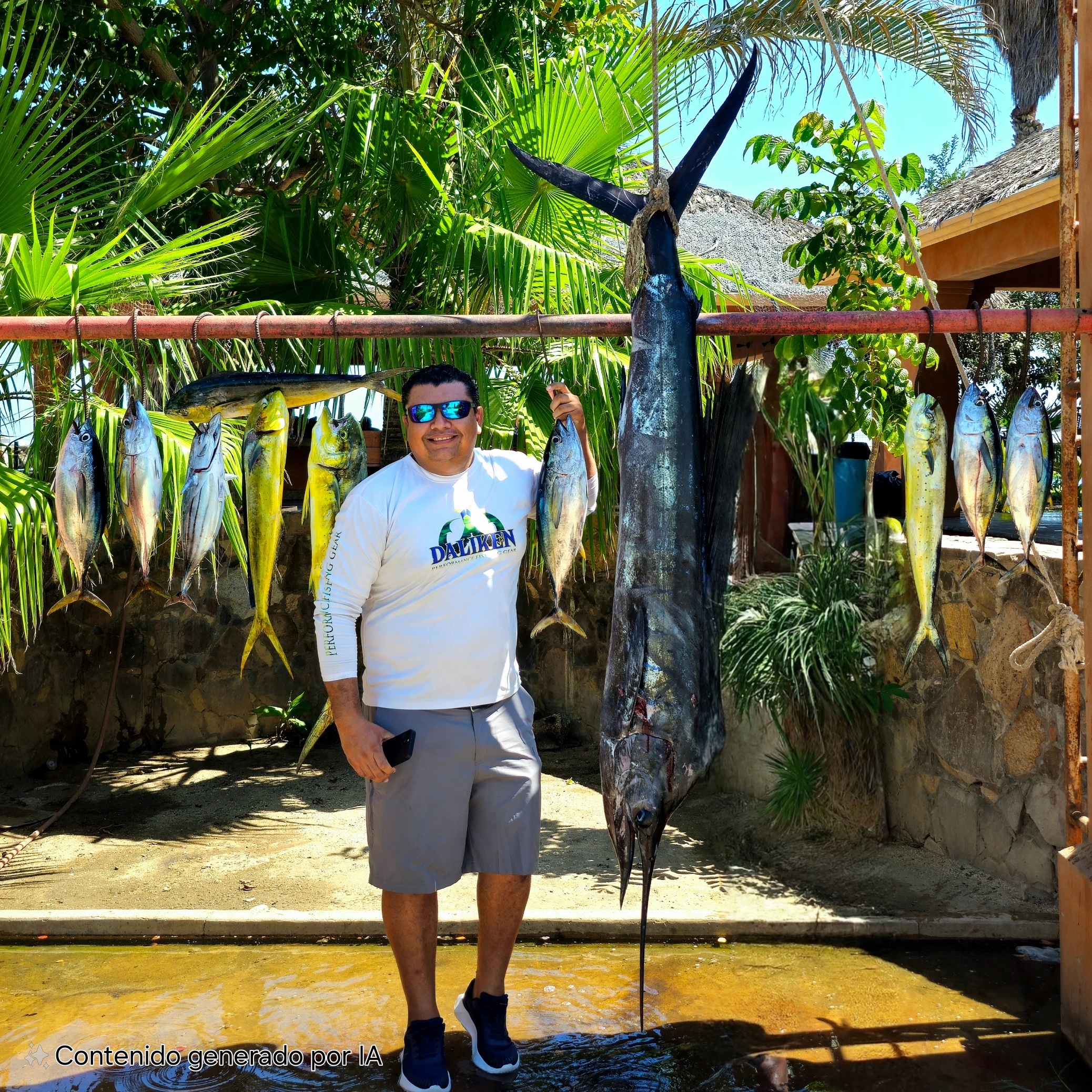
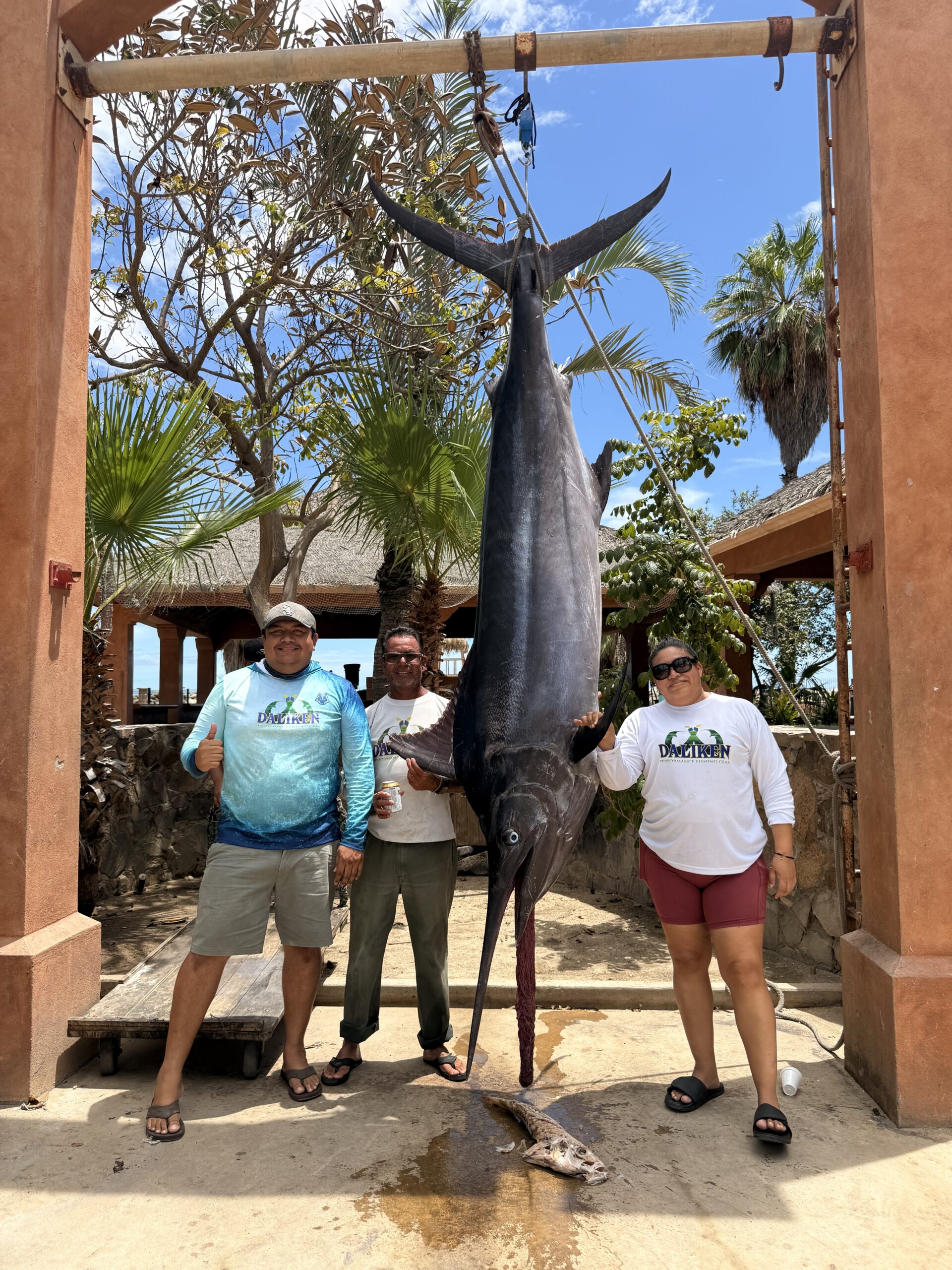
Real billfish caught and released on Daliken charters. Each species pictured below contributes toward Grand Slam status when caught on the same day.

Marlin Grand Slam FAQ
What is a Marlin Grand Slam in sportfishing?
What is the difference between Grand Slam, Super Grand Slam, and Fantasy Slam?
What species count toward a Cabo Grand Slam?
When is the best time to attempt a Grand Slam in Cabo?
What are the chances of getting a Grand Slam in Cabo?
Do sailfish count for a billfish Grand Slam?
How long should a slam-focused fishing trip be?
Which Daliken boat is best for a slam attempt?
How is a slam officially recognized?
What is a Royal Slam in billfishing?
- International Game Fish Association (IGFA) - official slam definitions and recognition standards
- The Billfish Foundation - slam achievement tracking and conservation framework
- NMFS Scientific Publications Office - billfish biology and Pacific species data
- Bisbee's Black & Blue Tournament historical records - Cabo billfish achievements and seasonality
- Marlin Magazine - feature coverage of slam techniques, history, and notable achievements
- IUCN Red List - billfish conservation status (blue marlin, striped marlin, sailfish, black marlin, shortbill spearfish)
- Daliken Sportfishing operational logs - regional billfish observations and seasonality data
Plan Your Cabo Slam Attempt
Tell us your target window, your species priorities, and your dedication level. We will configure the right boat, the right duration, the right approach. Slams happen when preparation meets opportunity.