
Sea of Cortez
Conservation
The complete guide to the marine ecosystem Jacques Cousteau called "the world's aquarium": its biodiversity, the threats it faces, the success stories of its recovery, and what every visitor can do to help.
"The Aquarium of the World" - Jacques Cousteau
The Sea of Cortez, also known as the Gulf of California, is one of the most biodiverse marine ecosystems on the planet. Stretching 1,557 kilometers from the Colorado River delta to the southern tip of Baja California, it shelters more than 900 fish species, 36 marine mammal species, and approximately 10% endemic species found nowhere else on Earth.
Why Cousteau Called It "The World's Aquarium"
In 1987, the French oceanographer Jacques-Yves Cousteau led an expedition aboard the research vessel Alcyone into the Sea of Cortez. What his team documented, ranging from majestic whale sharks and manta rays to marlin, sailfish, and pods of orcas, prompted Cousteau to describe the region with a phrase that has defined it ever since: "the world's aquarium."
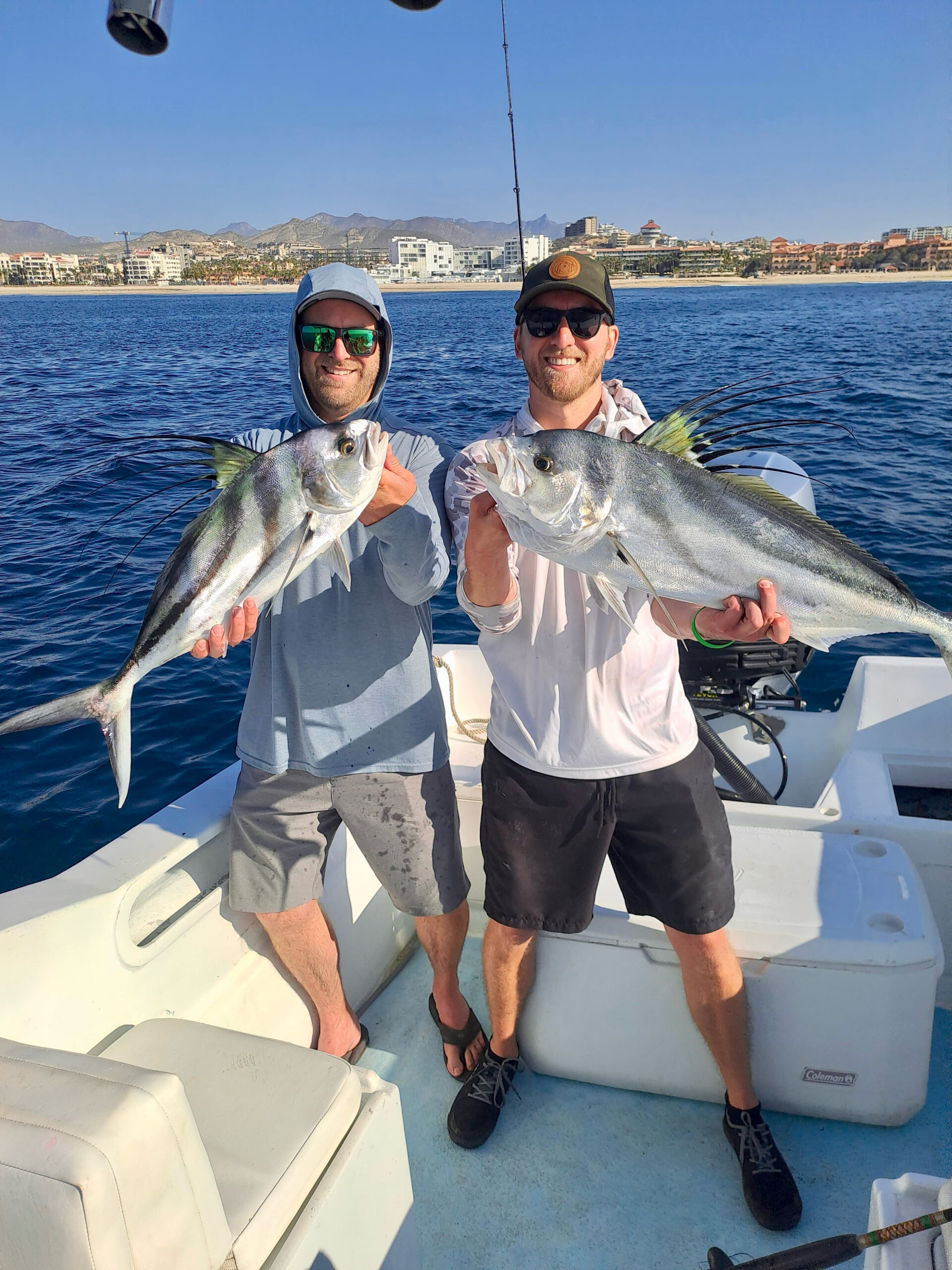
The convergence of Pacific currents and the Sea of Cortez creates the conditions for one of the most productive marine ecosystems on the planet. Photographed from a Daliken charter heading offshore from Puerto Los Cabos Marina.
What Cousteau saw
The expedition documented a marine environment where temperate and tropical species coexist due to a remarkable convergence of ocean currents. The Cousteau Society report described "a dazzling array of marine species: vibrant coral reefs, the awe-inspiring whale shark, swift marlins, gliding manta rays, enigmatic sharks, and playful dolphins." The region was, even then, beginning to show signs of pressure from commercial overfishing and unchecked tourism.
The literary record
Before Cousteau, the American novelist John Steinbeck and marine biologist Ed Ricketts had already chronicled the Sea of Cortez in their 1941 book The Log from the Sea of Cortez. Steinbeck described tide pools teeming with life and reef systems of extraordinary diversity. Reading their account today, alongside modern survey data, allows us to measure what has changed in the last 80 years, both what has been lost and what has been recovered through conservation.
The phrase "world's aquarium" is not marketing. It is a scientific consensus shared by researchers from Scripps Institution of Oceanography, Smithsonian Institution, and National Geographic. The Sea of Cortez is one of the few large marine ecosystems where active conservation has produced measurable recovery in living memory.
The Physical Setting
The Sea of Cortez is geologically young, formed approximately 5 to 5.6 million years ago when tectonic forces separated the Baja California Peninsula from mainland Mexico. This relatively recent formation, combined with its semi-enclosed configuration, has shaped a unique marine environment.
Dimensions and structure
The Gulf extends 1,557 kilometers (approximately 970 miles) from the Colorado River delta in the north to the area where it opens into the Pacific Ocean south of Cabo San Lucas. It varies from 100 to 200 kilometers wide. Maximum depths exceed 3,000 meters in the central trench.
Why it is so productive
The convergence of cold currents from the Pacific with warm tropical waters creates strong upwelling zones. These bring nutrient-rich water to the surface, fueling phytoplankton blooms that support the entire food web, from small fish to whales.
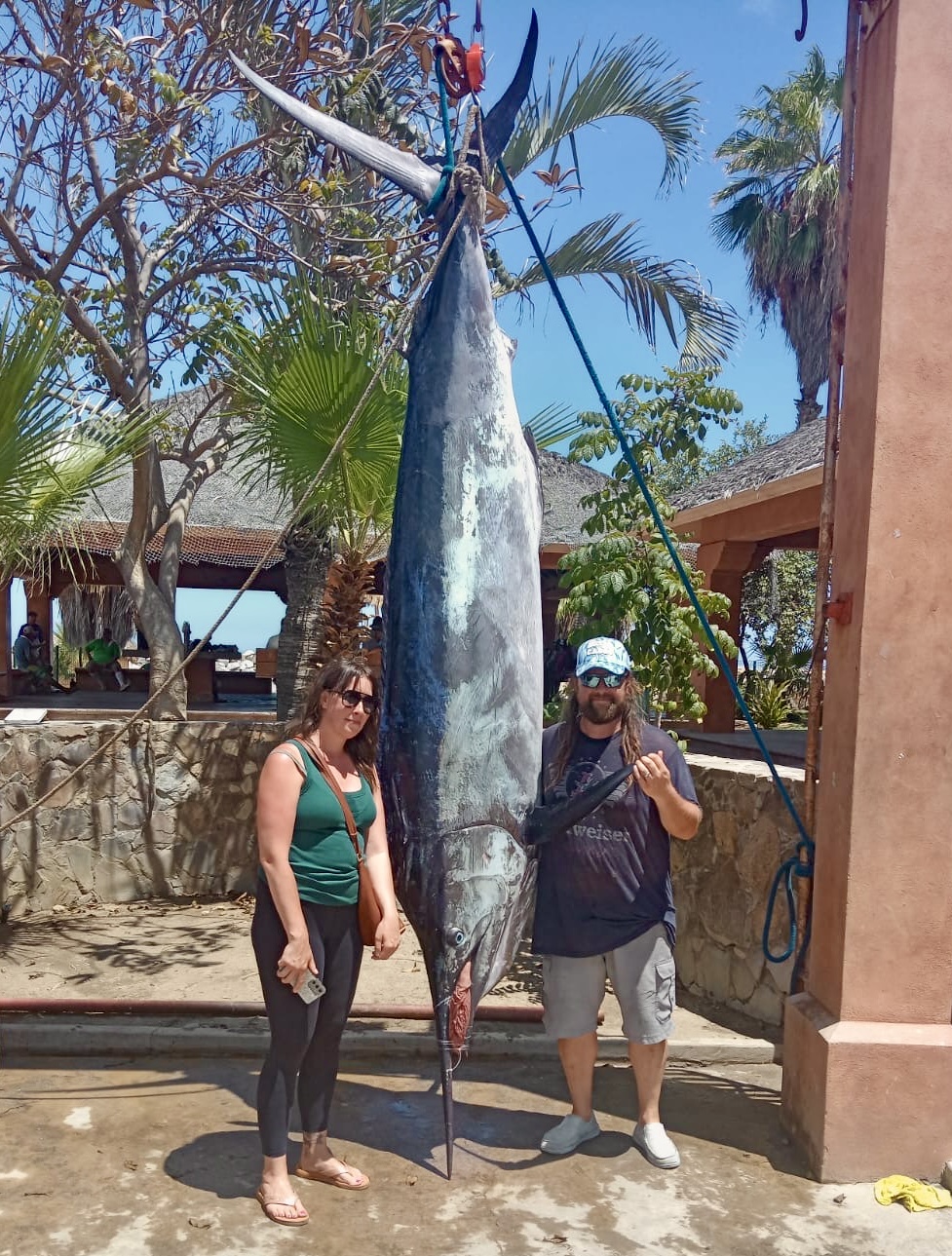
Where Cabo sits in this geography
San Jose del Cabo is positioned at the southern tip of the Baja California Peninsula, where the Sea of Cortez meets the open Pacific Ocean. This places our fishing grounds at the most biologically productive intersection of two ocean systems. The Gordo Banks system, our primary offshore fishing zone, sits exactly on this convergence and is one reason it produces world-class billfish action year-round.
The Biodiversity Statistics
What follows are documented figures from peer-reviewed research and UNESCO World Heritage designation documentation. The numbers explain why the Sea of Cortez is treated by marine biologists as a global priority for conservation.
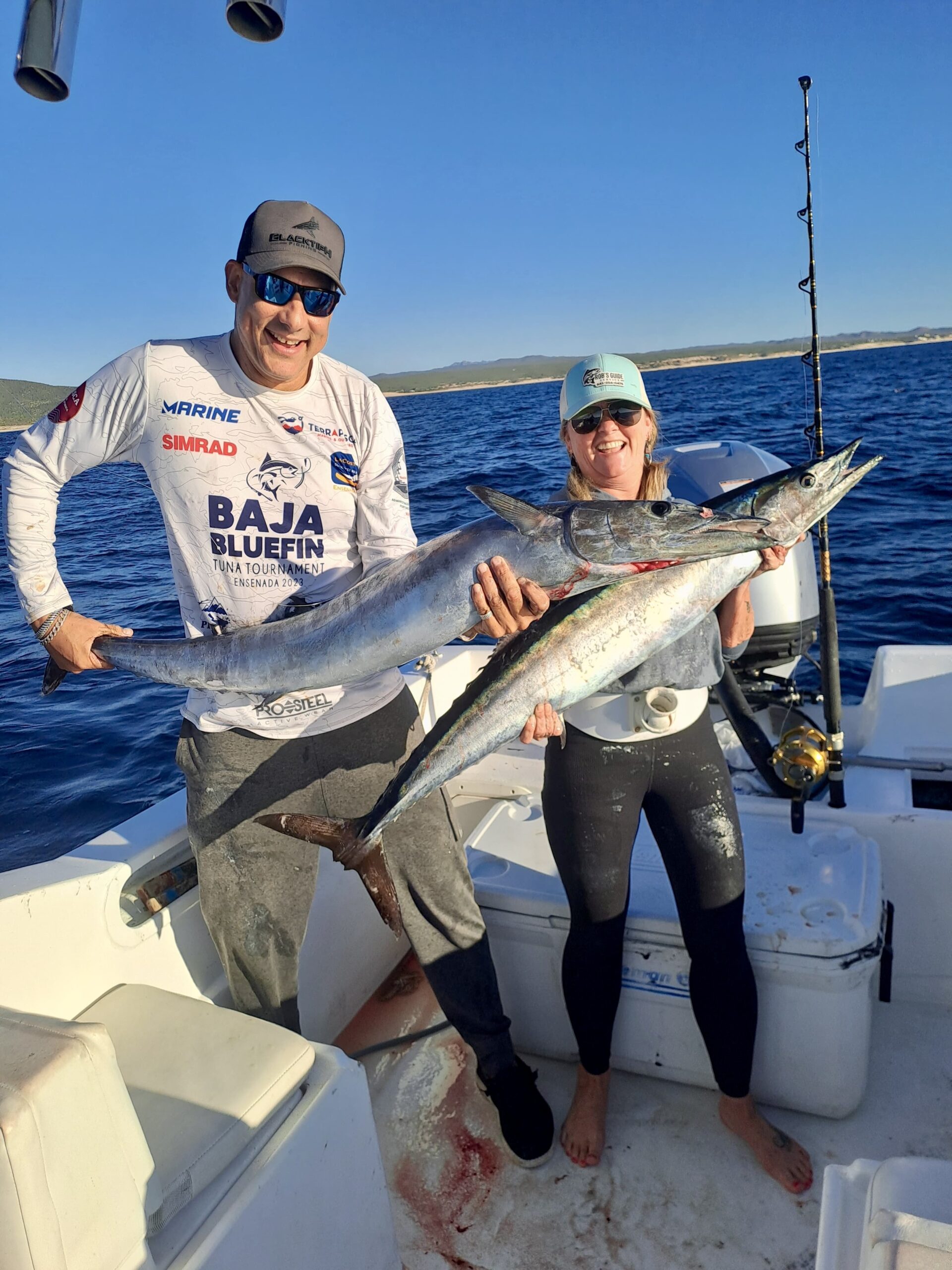
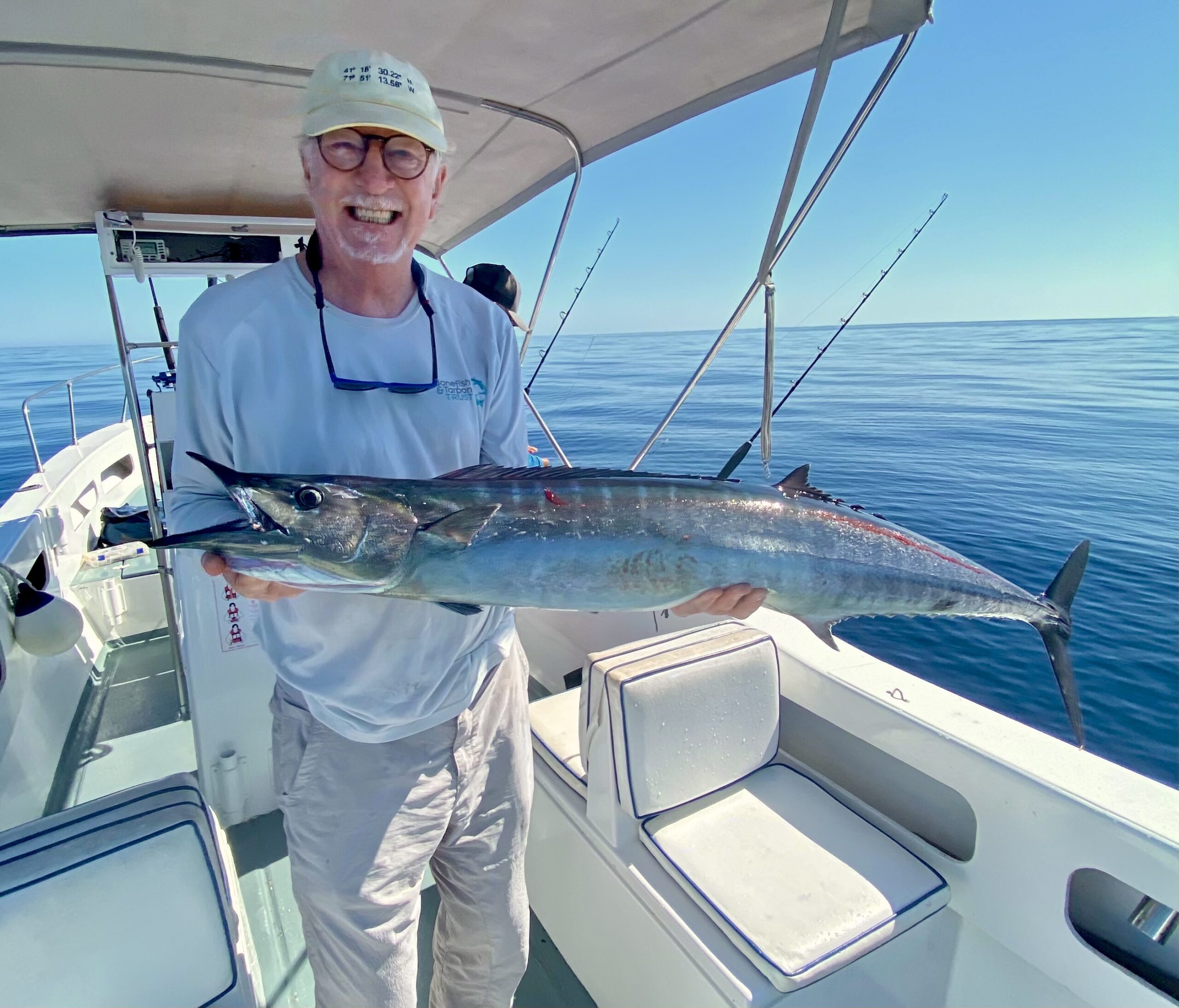
Wahoo (Acanthocybium solandri) is one of dozens of pelagic species that thrive in the productive offshore waters of the Sea of Cortez. Catches like this one are possible only where the food web remains healthy.
What the biodiversity supports
This species richness sustains both ecosystem function and human livelihoods. The commercial shrimp fishery alone employs over 37,000 workers across Mexico. Tourism, with sportfishing as a primary driver, generates approximately 500 million USD annually for Baja California Sur. Healthy biodiversity is not a luxury, it is the economic foundation of the region.
The Endemic Species of the Sea of Cortez
Approximately 10% of fish species in the Sea of Cortez are endemic, meaning they exist in this ecosystem and nowhere else on the planet. Several have become global conservation icons, both for their uniqueness and for the urgency of their protection.
Vaquita Porpoise
The smallest and most endangered porpoise on the planet. Fewer than 10 individuals are estimated to remain in the wild, all in the upper Sea of Cortez. Critically endangered due to illegal gillnet bycatch.
Totoaba Fish
A large endemic fish whose swim bladder commands extraordinary prices on the Chinese black market. Demand for totoaba bladders has driven the illegal fishing that also kills vaquitas. Fully protected since 1975.
Roosterfish
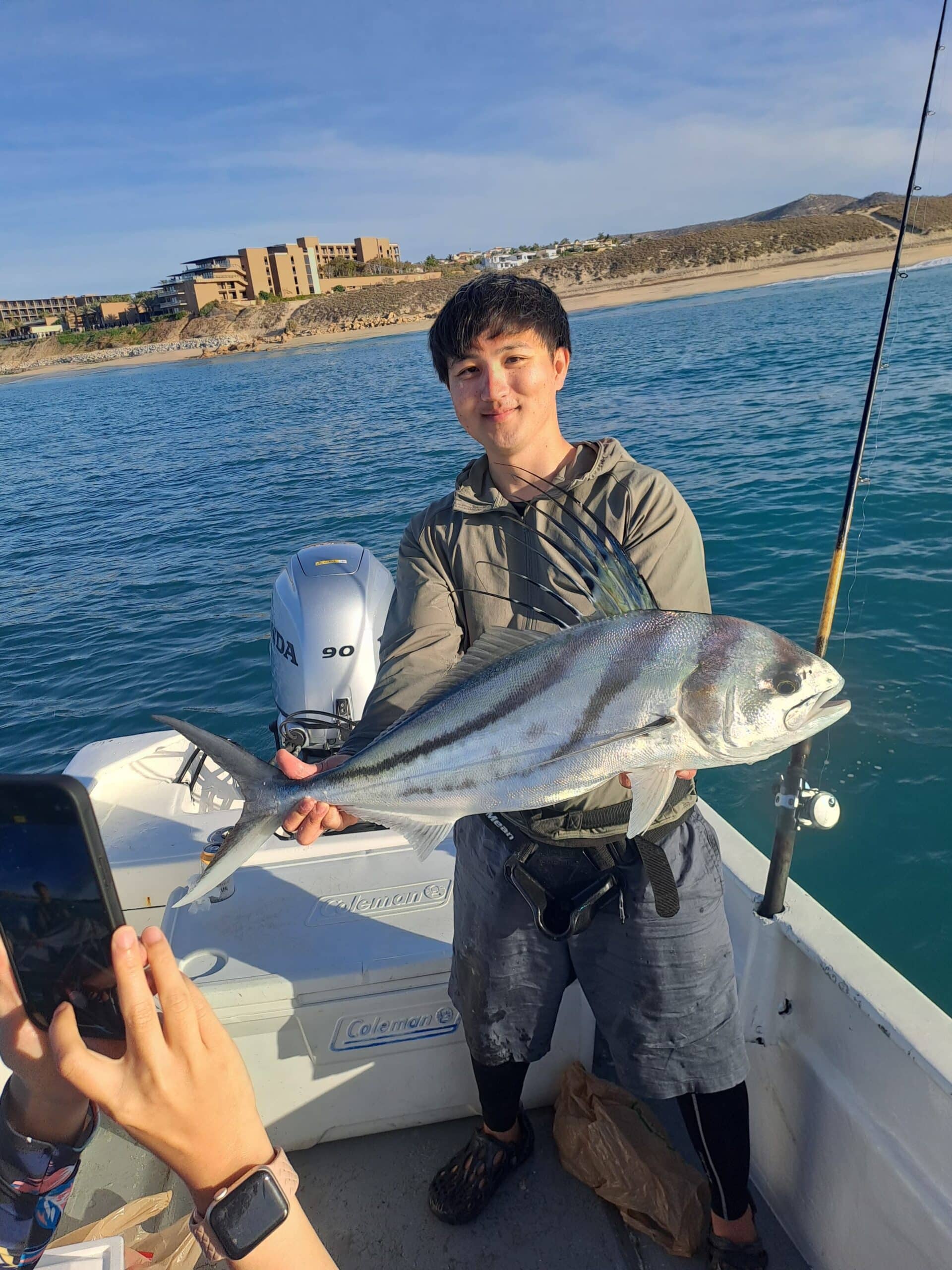
Not strictly endemic to the Sea of Cortez but the eastern Pacific population, centered on Baja, is the global stronghold. Slow-growing and increasingly the target of catch-and-release-only fisheries.
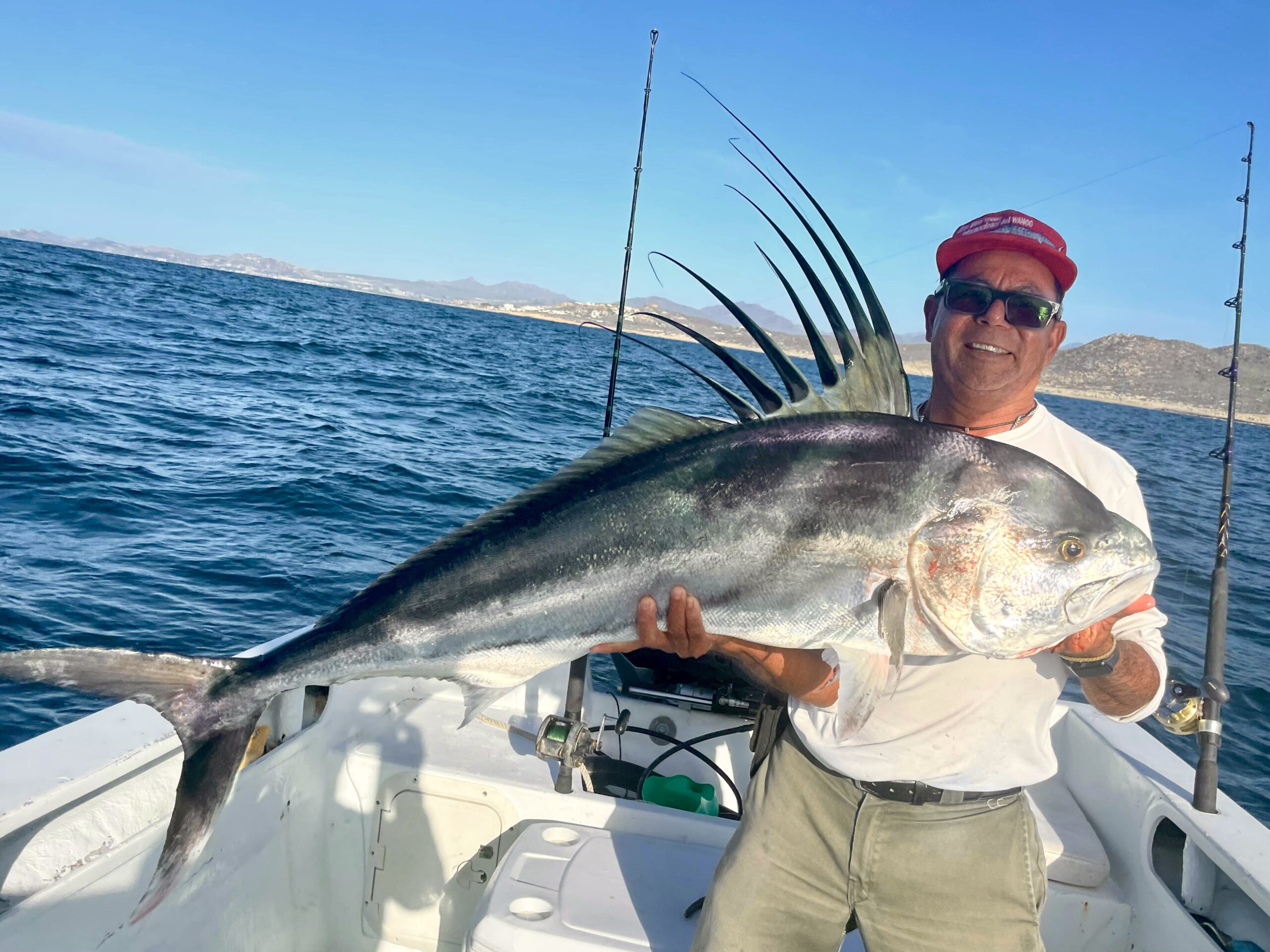
Pacific Roosterfish (Nematistius pectoralis). The Sea of Cortez is the global epicenter of this species. Catch and release is increasingly the standard among responsible charters because of slow growth rates.
Beyond fish: marine mammals
The Sea of Cortez hosts approximately one-third of all marine cetacean species globally. Year-round residents and seasonal visitors include blue whales (the largest animals ever to exist on Earth), fin whales, humpback whales, sperm whales, orcas, several dolphin species, and the California sea lion. Whale sharks, the largest fish on Earth, aggregate in the bay of La Paz seasonally.
UNESCO Recognition of the Gulf of California
On July 14, 2005, UNESCO designated the Islands and Protected Areas of the Gulf of California as a Natural World Heritage Site. The designation covers 244 islands, islets, and coastal areas across 12 federally protected zones spanning 1,557 kilometers of Mexican coastline.
Why UNESCO listed it
The Sea of Cortez was inscribed for two primary criteria. First, its extraordinary natural beauty, characterized by rugged volcanic islands rising from turquoise waters against the contrasting backdrop of the Sonoran Desert. Second, its exceptional biological importance as a habitat for endemic species and a critical ecological corridor for migratory marine life.
What the designation does and does not do
UNESCO designation brings international attention, monitoring, and pressure on the Mexican government to maintain effective protection. It does not provide direct funding or enforcement. The actual on-the-water protection depends on CONANP (Mexican National Commission of Natural Protected Areas), PROFEPA (Mexico's environmental protection agency), local communities, and NGO partners.
In July 2025, the Gulf of California marked 20 years as a UNESCO World Heritage Site. The recognition has elevated international attention but enforcement gaps and pressure from illegal fishing remain the central challenges to long-term protection.
The 12 Marine Protected Areas
Mexico has established a network of marine protected areas (MPAs) across the Gulf of California over the past five decades. These vary widely in size, protection level, and enforcement effectiveness. The most successful (Cabo Pulmo) demonstrates what is possible. Others struggle with limited enforcement.
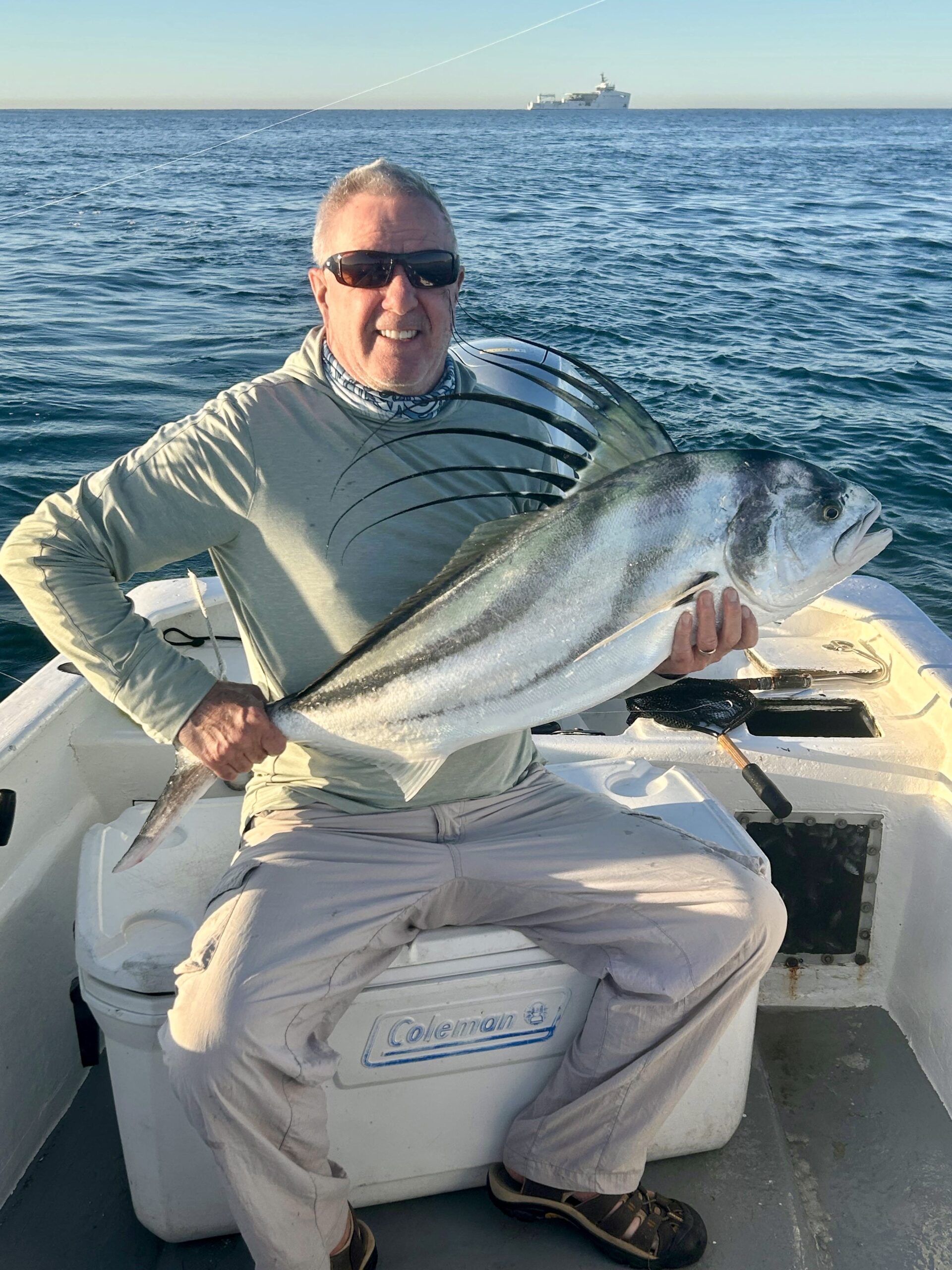
A Roosterfish released by a Daliken angler near the East Cape. The healthy populations in this area benefit from the regional conservation framework established by the network of marine protected areas.
The Cabo Pulmo exception
Of all these protected areas, only one (Cabo Pulmo National Park) is widely cited by researchers as a model of effective enforcement and measurable recovery. We dedicate a separate pillar guide to Cabo Pulmo because its story is essential to understanding what conservation can accomplish when communities, science, and government align.
Major Threats to the Sea of Cortez
Despite UNESCO recognition and the existence of MPAs on paper, the Sea of Cortez faces sustained pressures from multiple directions. Understanding these threats is essential to understanding why conservation work continues to matter and why responsible visitor behavior is part of the solution.
Illegal gillnet fishing and the vaquita crisis
The single most documented conservation crisis in the Sea of Cortez is the collapse of the vaquita porpoise population, driven by illegal gillnetting for totoaba fish. Totoaba swim bladders command tens of thousands of dollars on Chinese black markets due to purported medicinal value. Despite Mexico's 2020 gillnet ban, illegal nets continue to be deployed, drowning vaquitas as bycatch. Fewer than 10 vaquitas are believed to remain alive.
Industrial fishing depletion
The Pew Bertarelli Ocean Legacy documents that industrial fishing has driven significant declines in shark populations and contributed to the collapse of the sardine industry in the region. Sardines are a foundational species in the food web; their loss cascades to predatory species including tuna, dorado, billfish, and marine mammals that depend on them as prey.
Habitat degradation
Coastal development, agricultural runoff from mainland Mexico, and climate change all contribute to ecosystem stress. Warming waters affect species distribution and reproductive cycles. Plastic pollution accumulates in coastal areas. Anchor damage to coral and seagrass beds compounds with other pressures.
Inadequate enforcement
The conservation researcher Mission Blue has documented that many Mexican MPAs are "paper parks" in practice: protected on paper but with insufficient enforcement on the water. PROFEPA, the Mexican environmental protection agency, is understaffed and underfunded. Park rangers may visit some islands only once a month or less.
The Sea of Cortez is not a wilderness immune to human impact. It is a working ecosystem under pressure that survives because of, not despite, the constant work of researchers, communities, NGOs, and responsible operators. Every visitor either adds to that pressure or to the solution.
Conservation Success Stories
Against the backdrop of pressure, the Sea of Cortez has produced some of the most documented marine conservation successes in the world. These cases prove that recovery is possible when the right conditions align.

Cabo Pulmo: the 463 percent recovery
Cabo Pulmo National Park was established in 1995 as a no-take marine reserve at the request of the local community. A peer-reviewed 2011 study published in PLOS ONE by Aburto-Oropeza et al. (Scripps Institution of Oceanography) documented that between 1999 and 2009, total fish biomass inside the reserve increased by 463 percent. Top predator biomass increased by a factor of 11. Researchers called it the largest documented recovery of fish biomass in any marine reserve worldwide.
Espiritu Santo recovery
The Espiritu Santo Archipelago National Park near La Paz protects critical breeding grounds for California sea lions and one of the largest aggregations of mobula rays in the world. Since its 2007 designation, regulated tourism and enforcement of fishing restrictions have supported a stable, observable sea lion population.
Revillagigedo: largest marine park in North America
In 2017, Mexico declared the Revillagigedo Archipelago (also known as the Socorro Islands) a fully protected National Park, becoming the largest fully protected marine area in North America at 148,000 square kilometers. The site is home to manta rays, sharks, and humpback whales. This represented one of the largest conservation actions in Mexican history.
How Sportfishing Fits Into Conservation
Sportfishing has a complicated relationship with marine conservation. Done responsibly, it is one of the strongest economic arguments for protecting fish populations. Done irresponsibly, it contributes to the very problems conservation tries to solve. The difference is in the details.
The economic case for conservation
Sportfishing tourism in Baja California Sur generates approximately 500 million USD annually. This is direct economic incentive for the Mexican government, local communities, and operators to maintain healthy fish populations. A dead marlin on a dock is worth a few hundred dollars in trophy value. A live marlin in the water represents thousands of dollars in future tourism revenue as anglers travel from around the world to catch it.

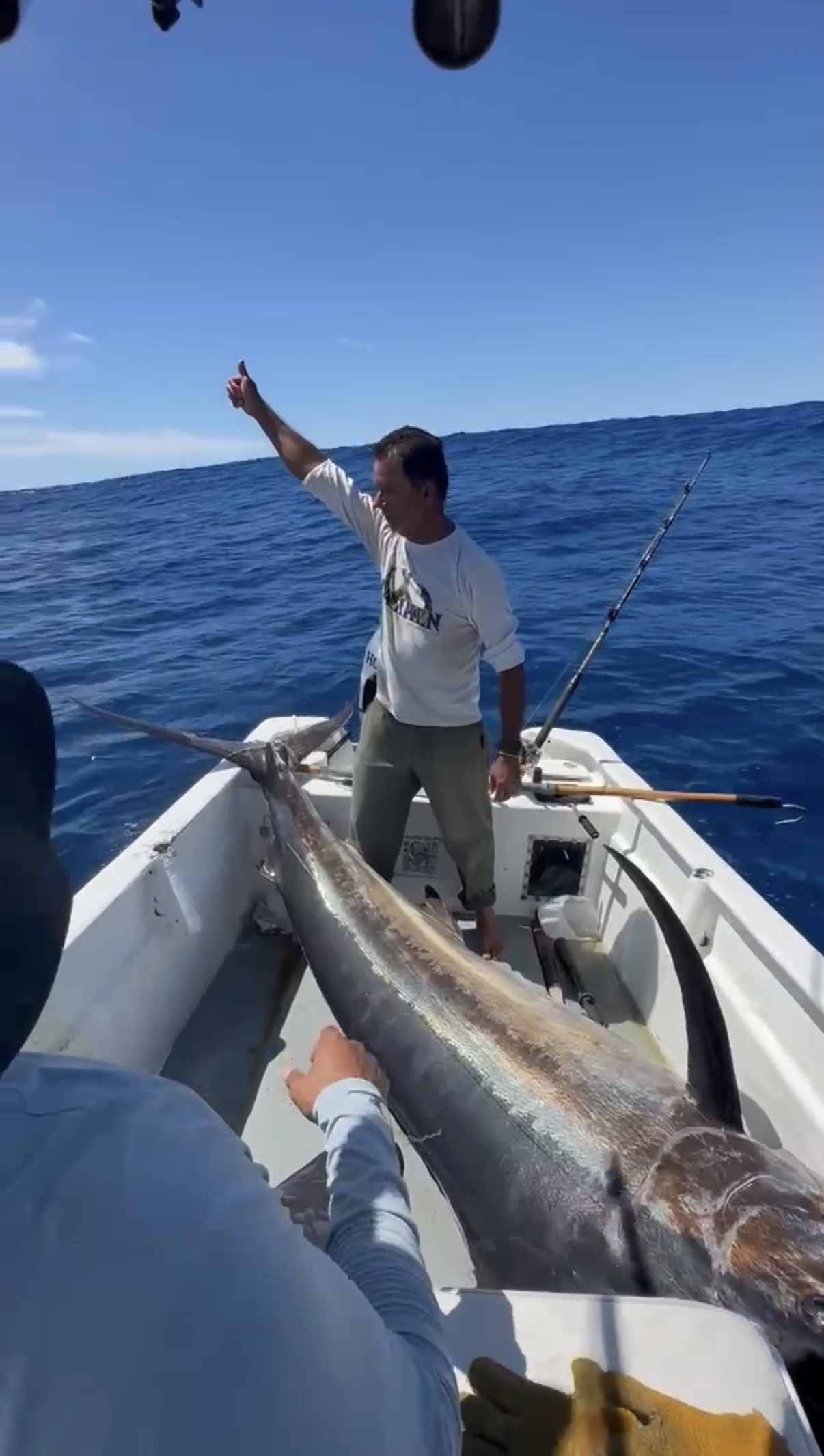
A Daliken captain prepares to release a marlin. Captains who release every billfish, every trip, are part of the conservation infrastructure that protects the Sea of Cortez fishery long-term.
Where responsible sportfishing helps
- Provides ongoing data on fish populations through licensed catch logs (CONAPESCA)
- Funds Mexican fisheries management through license sales
- Creates jobs that depend on healthy ecosystems, not their depletion
- Builds public constituency for marine protection
- Pioneered circle hook adoption and catch-and-release practices that have benefited the species long-term
Where it falls short
- Operators who retain billfish trophies undermine the conservation argument
- Bycatch of protected species when poor handling practices are used
- Boat damage to coral reefs from improper anchoring
- Fuel emissions from unnecessarily long offshore runs
The bottom line: the impact of sportfishing on the Sea of Cortez depends entirely on which operator you choose. Daliken's sustainable fishing practices are documented in detail in our companion pillar guide.
How Every Visitor Can Help
The future of the Sea of Cortez depends on the cumulative behavior of millions of visitors, residents, and decision makers. Individual choices add up. Here is what actually matters.
Choose Operators Carefully
Book with charters that publicly document conservation practices and have track records, not just marketing claims. Ask specific questions before booking.
Release Billfish
Make it a personal rule: no marlin or sailfish trophy retention, regardless of size. The fishery survives only if billfish stay in the water.
Selective Harvest
Keep only what you and your group will actually eat. Dorado, tuna, and wahoo are excellent table fish; bag limits exist for a reason.
Beyond the boat
- Refuse single-use plastics during your trip, on board and on shore
- Support local restaurants that source from licensed sustainable operations
- If you snorkel or dive, never touch or stand on coral; use reef-safe sunscreen
- Respect marine wildlife distances; do not chase or harass whales, dolphins, sea lions, or turtles
- Donate to or amplify the work of organizations actually working in the region: Cabo Pulmo Vivo, Niparaja, Pronatura Noroeste, Beta Diversidad
- Share what you learn; the conservation case grows stronger as more visitors understand it
The single most impactful thing a visiting angler can do is release every billfish caught. One angler who books five trips over their lifetime and releases every marlin contributes more to conservation than a thousand passive supporters.
Daliken in the Sea of Cortez
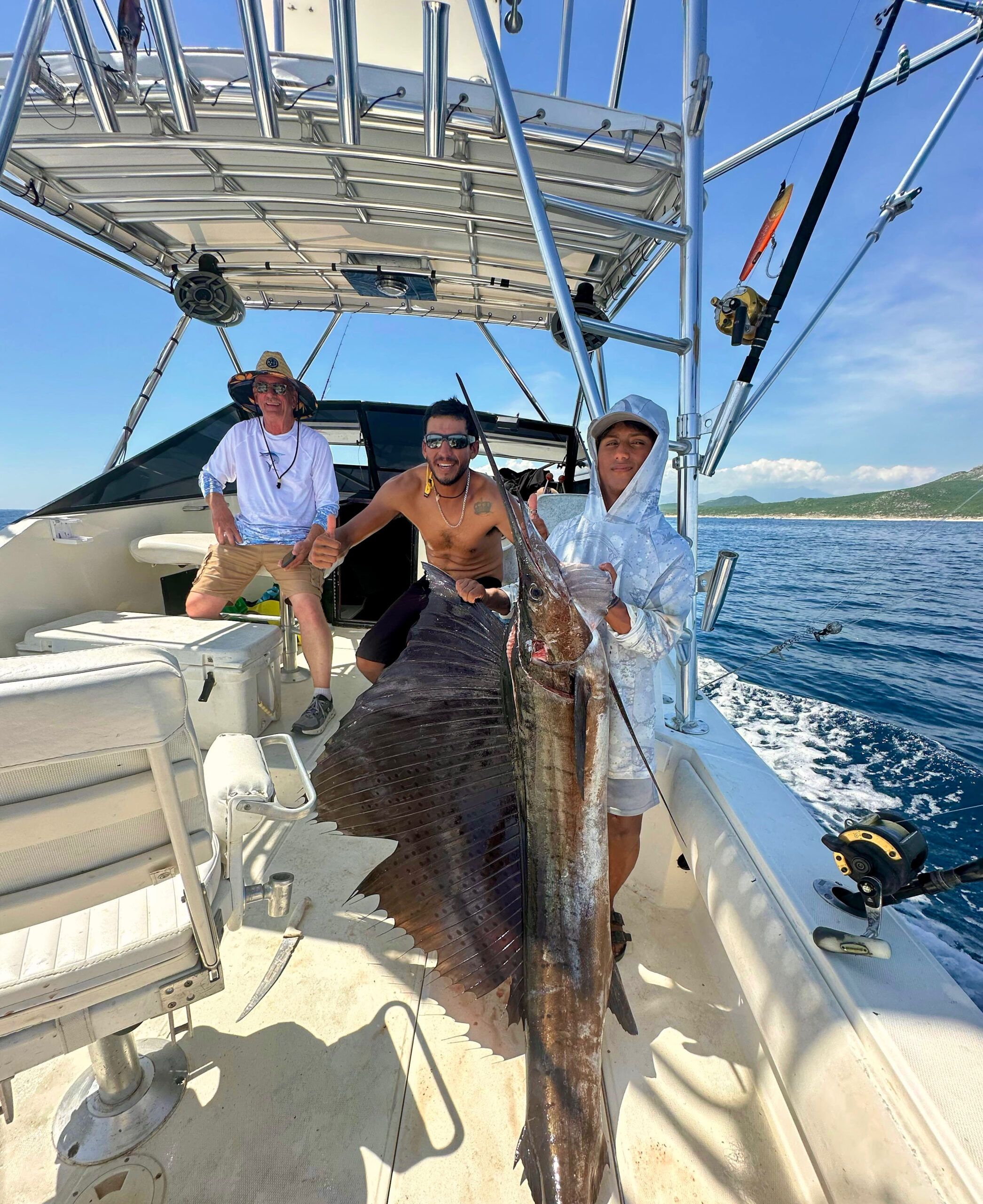
Real photos from real Daliken Sportfishing trips. Conservation practices in action, on the water, every working day of the season.

Sea of Cortez Conservation FAQ
Why did Jacques Cousteau call it "the world's aquarium"?
How many fish species live in the Sea of Cortez?
What is a vaquita and why is it endangered?
Is the Sea of Cortez a UNESCO World Heritage Site?
What is the most successful marine conservation story in the region?
Can sportfishing help conservation?
What are the biggest threats to the Sea of Cortez right now?
What can I do as a visitor to help?
- UNESCO World Heritage Centre - Islands and Protected Areas of the Gulf of California (2005 designation)
- Aburto-Oropeza, O., et al. (2011). "Large Recovery of Fish Biomass in a No-Take Marine Reserve." PLOS ONE 6(8): e23601 - Scripps Institution of Oceanography
- Smithsonian Ocean Portal - Cabo Pulmo Protected Area case study
- Cousteau Society - 1987 Sea of Cortez expedition report
- National Geographic - Saving Baja's iconic biodiversity
- Pew Bertarelli Ocean Legacy - Baja California Pacific and Sea of Cortez initiative
- Mission Blue - Sea of Cortez conservation reporting
- Steinbeck, J. & Ricketts, E. (1941). The Log from the Sea of Cortez
- CONAPESCA (Mexico) and CONANP (Mexican National Commission of Natural Protected Areas)
Fish the World's Aquarium Responsibly
Choose a charter that treats the Sea of Cortez as an inheritance, not a resource. Private trips from Puerto Los Cabos Marina with documented conservation practices on every charter.