
The History of Sportfishingin Los Cabos
Los Cabos did not become one of the world's premier sportfishing destinations by accident. It is the result of millennia of human relationship with these waters, the vision of mid-20th century pioneers who saw what others could not, and the slow accumulation of infrastructure, reputation, and tradition. This is the complete story.
The Original Anglers: Pericu People and Spanish Exploration
Long before any sportfishing charter existed, the southern tip of Baja California was home to the Pericu people, an indigenous culture that inhabited the region for over 10,000 years. The Pericu were expert fishermen and gatherers who built their lives around the rich marine resources of the Sea of Cortez and the surrounding Pacific waters. Their tools included shell hooks, woven nets, and reed boats. The Sea of Cortez, with its extraordinary biodiversity, sustained their communities for millennia.
European arrival
The European chapter began on May 3, 1535, when the Spanish conquistador Hernan Cortes first landed in the area, naming the bay Bahia de Santa Cruz. Throughout the 1500s and 1600s, Spanish navigators including Juan Rodriguez Cabrillo and Sebastian Vizcaino charted the peninsula's coastlines. The region became strategically important as a stopping point for Spanish ships traveling between Mexico and the Philippines, which made it a target for pirates seeking treasure-laden galleons.
The Jesuit missions
In 1730, Jesuit missionaries established the Mission San Jose del Cabo near the present-day town of the same name. This was part of a chain of missions designed to spread Christianity and Spanish influence throughout Baja California. The mission marked the beginning of permanent European settlement in the region, though the population remained tiny for centuries. Cabo San Lucas and San Jose del Cabo together became known as Los Cabos (the capes).
Centuries of obscurity
For most of the next 200 years, Los Cabos remained a remote outpost. The 1930s population of Cabo San Lucas was approximately 400 people. The area was accessible only by small plane, long-range yacht, or anyone willing to travel approximately 1,000 miles of rutted dirt roads down the Baja peninsula. The seas, however, teemed with fish, and word slowly began to spread among adventurous American anglers about the extraordinary marine life waiting in this hard-to-reach corner of Mexico.
The Pre-Tourism Era: Zane Grey, Steinbeck, and the First Whisper
Decades before Cabo San Lucas had a real hotel, before any road connected it to mainland Mexico, and before any tourism industry existed, two American writers gave the region its first literary recognition in the English-speaking world.
Zane Grey discovers the Yellowfin
In the 1920s, the celebrated American author Zane Grey, who would later be inducted into the IGFA Hall of Fame, fished the waters around Cabo San Lucas. Grey wrote about the extraordinary yellowfin tuna frenzies he witnessed, describing the sportfishing potential of these remote waters in glowing terms. His writings reached a small but influential audience of serious anglers who began making the difficult journey south. Grey is widely considered one of the first major writers to publicize Cabo's sportfishing potential to the outside world.

A blue marlin caught in Cabo waters today. The same species that drew Zane Grey to the region a century ago continues to drive the modern sportfishing industry. Some traditions transcend generations.
John Steinbeck's Sea of Cortez
In 1940, Nobel Prize-winning author John Steinbeck and marine biologist Ed Ricketts embarked on a six-week expedition through the Sea of Cortez. The resulting book, Sea of Cortez: A Leisurely Journal of Travel and Research, was published in 1941. A later edition, The Log from the Sea of Cortez, became one of the most influential nature writing books of the 20th century. Steinbeck's vivid descriptions of the Sea of Cortez's extraordinary marine life awakened broader American interest in the Gulf of California region.
The seed is planted
By the late 1940s, a small but growing community of American big-game anglers had identified the southern Baja peninsula as one of the most productive sportfishing regions in the world. The challenge was that getting there required extraordinary effort. Anglers traveled by private yacht, charter aircraft, or grueling overland journeys. The infrastructure to support a real sportfishing industry simply did not exist yet. That would soon change.
"That is how Zane Grey, master storyteller and IGFA Hall of Famer, described the sportfishing potential of Cabo San Lucas some 100 years ago. In those days, the only way to reach Baja's fishing grounds was by setting sail and venturing south aboard your own vessel."
Ray Cannon: The Father of Baja Sportfishing Tourism
If one person can be credited with single-handedly putting Baja California sportfishing on the international map, that person is Ray Cannon. A former Hollywood bit player and later director-producer, Cannon abandoned the film industry to devote the last 30 years of his life (1947 to 1977) to fishing, exploring, and writing about Baja California. He became known to locals as "Senor Cannon" and to readers as the vagabundo del mar, the sea-going gypsy.
Raymond "Ray" Cannon
Ray Cannon spent 30 years fishing, traveling, and writing about Baja California. His magazine articles in Western Outdoor News and other publications, combined with his coffee-table classic The Sea of Cortez (Sunset Books, 1966), brought the first wave of big-spending American anglers to the region.
Cannon famously described the Sea of Cortez as "the world's greatest fish trap" with "acres of roosterfish, mile-long schools of migrating totuaba, teeming swarms of Cortez grunion, and of all class of marlin, sailfish, jack and snook and bass and grouper and sardine." His writings made the impossible seem accessible.
When Ray Cannon died on June 25, 1977, his ashes were scattered on the waters of Canal de San Lorenzo near La Paz. Local Mexican communities lined the roads in silent tribute as the motorcade passed. As an industry, Baja California's sportfishing began with him.
The 1966 book that changed everything
Cannon's most influential work was the book The Sea of Cortez, published by Sunset Books in 1966. The hardcover coffee-table volume was beautifully illustrated, full of fishing stories, travel descriptions, and a detailed appendix on regional sea life. Critics and readers called it the book that jump-started tourism in Baja California in the 60s and 70s. For decades, it could be found in the personal library of nearly every serious Baja angler.
The relationship with Rancho Buena Vista
Cannon made Rancho Buena Vista, a 35-room fishing lodge on the East Cape owned by Colonel Eugene P. Walters, his Baja home base. In January 1969, the "Casa Cannon" Round House was constructed for him at Rancho Buena Vista by Ted Bonney, with a lifetime lease at approximately $21 per month. Cannon spent the remainder of his career writing from there, hosting visiting Hollywood celebrities, and refining his almost mythic descriptions of Baja sportfishing.
The Hotel Pioneers: Rod Rodriguez and Don Luis Bulnes
While Ray Cannon wrote the legend, two hoteliers built the infrastructure that made the legend reachable. Abelardo "Rod" Rodriguez Montijo and Don Luis Bulnes Molleda created the first generation of resorts that transformed Los Cabos from an angler's secret into a viable destination.
Abelardo "Rod" Rodriguez Montijo
Son of General Abelardo Rodriguez, who served as Governor of Baja California, Governor of Sonora, and substitute President of Mexico from 1932 to 1934. Rod Rodriguez was the visionary hotelier who built the first three foundational properties of Los Cabos hospitality.
Rodriguez built Rancho Las Cruces in 1950, considered Baja's original luxury fishing resort. He followed with Hotel Palmilla in 1956 (a small 15-room resort accessible only by private plane or yacht), and the original Hotel Hacienda Cabo San Lucas in 1962 on Medano Beach.
His wife was the Hollywood actress Lucille Bremer, whose connections brought a steady stream of celebrity guests including Desi Arnaz, Lucille Ball, Bing Crosby, John Wayne, and President Dwight D. Eisenhower.
Don Luis Bulnes Molleda
Born in Ribadesella, Spain, Don Luis Bulnes Molleda became one of the most consequential figures in modern Cabo San Lucas history. He founded Hotel Solmar and built one of the early sportfishing fleets in the region, becoming what BD Outdoors called "the Father of Cabo San Lucas Sportfishing."
Bulnes was credited with bringing the dredging equipment that cut away the dune separating the Cabo San Lucas marina basin from the ocean, allowing ferryboats from mainland Mexico to enter. Hotel Solmar grew from 20 rooms to 84 in less than a year after the Transpeninsular Highway was completed.
Bulnes was famous for saying: "Between Cabo San Lucas and the Revillagigedo Islands south of us, we have more striped marlin than anywhere in the world." He died at age 83 in October 2011.
The first wave of hotels
By the early 1970s, several pioneering hotels had opened or were under construction. Hotel Hacienda Cabo San Lucas (originally built in 1962 by Rodriguez) was joined by Hotel Mar de Cortez (1972), Hotel Finisterra (1972), Solmar Suites (1977), and the original Twin Dolphin (1977). Across the bay, San Jose del Cabo developed differently, with Hotel Palmilla anchoring the corridor between the two towns.
What made it possible
Each of these hotels required pioneers willing to invest in a region that had almost no supporting infrastructure. There was no marina (Cabo's wasn't dredged until 1974 to 1975), no paved road connecting to mainland Mexico, limited fresh water, and intermittent electricity. The hotels brought the first wave of wide-eyed travelers and gradually built the visitor economy that would support what was coming next.
The Hollywood Era: Celebrities Discover Cabo
The combination of Rod Rodriguez's Hollywood-connected wife Lucille Bremer, Ray Cannon's writings, and the genuine privacy of remote Baja made Los Cabos and the broader East Cape region a magnet for mid-20th century Hollywood royalty.
Rancho Las Cruces: the celebrity refuge
Rancho Las Cruces, the resort Rodriguez built in 1950 across the bay from La Paz, became the most exclusive celebrity destination in Baja California Sur. Hollywood stars built private homes on the property. Bing Crosby had a personal home there, and Crosby vacationed at Las Cruces regularly throughout his life. Desi Arnaz built a house with a famous guitar-shaped pool. The Robert Fisher house (now Hacienda Santa Cruz), Charles Jones house, and Roger Bacon house all formed part of the exclusive celebrity enclave.
Hotel Palmilla guest list
When Hotel Palmilla opened in 1956, it became the gathering place for an extraordinary celebrity guest list. Documented early guests included Desi Arnaz, Lucille Ball, Bing Crosby, John Wayne, and President Dwight D. Eisenhower. The property was accessible only by private plane or yacht in its early years, which preserved the privacy that made it valuable to high-profile guests.
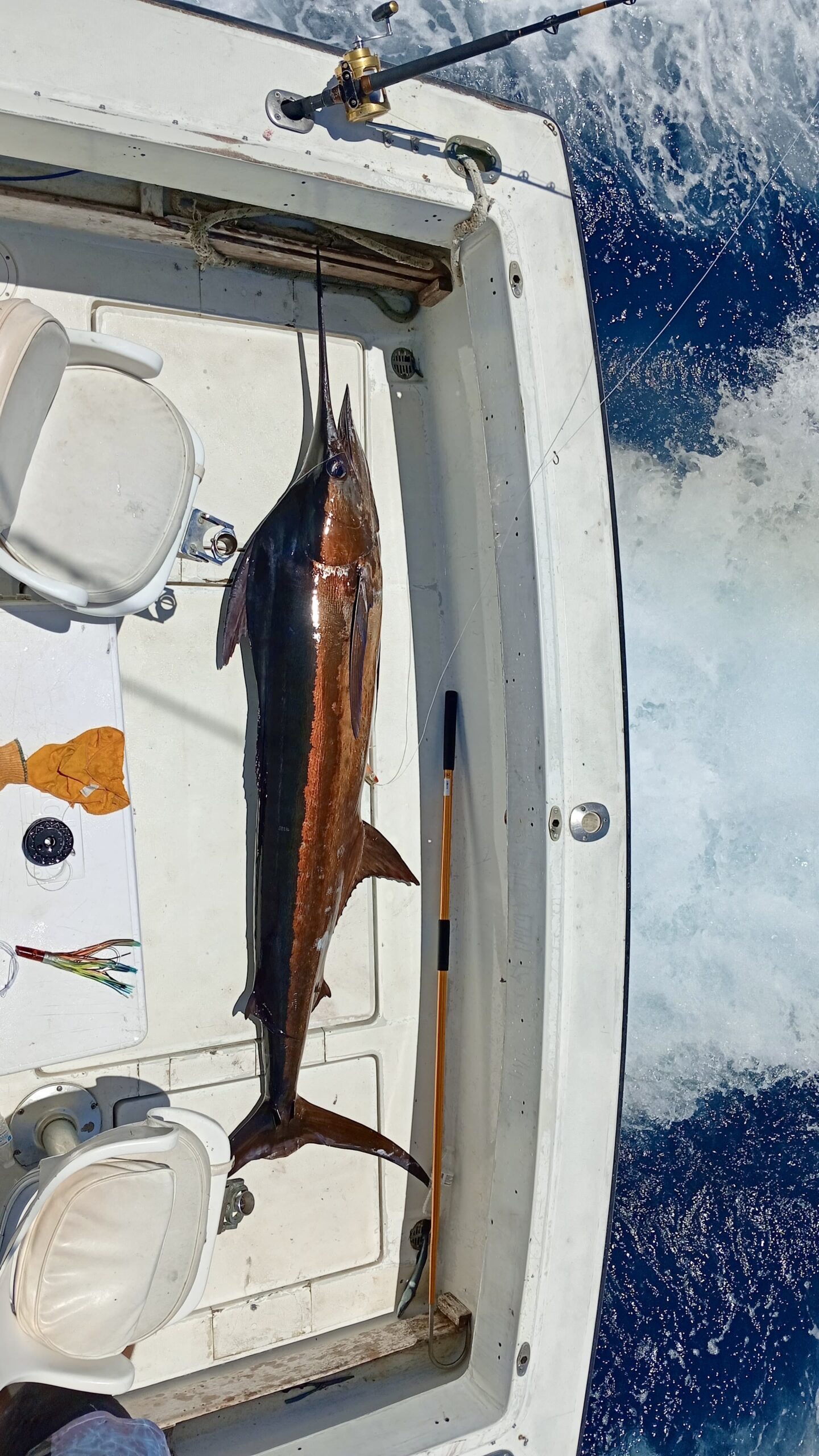
A striped marlin in Cabo waters. The Hollywood celebrities who visited Cabo in the 1950s and 1960s came primarily for two things: privacy and world-class sportfishing. Both endure today.
Rancho Buena Vista on the East Cape
Up the East Cape from Los Cabos, Rancho Buena Vista hosted its own celebrity guest list including John Wayne, Bing Crosby, and Errol Flynn. The 35-room ranch nestled under palms became home to Ray Cannon and a magnet for serious anglers who mingled with celebrity visitors. The combination of remoteness, fishing quality, and the social cachet of being part of a small but distinguished group made the East Cape and Los Cabos region a singular destination in mid-century Hollywood culture.
Celebrity guests came to Cabo precisely because it was hard to reach. Each generation that improved access to Los Cabos (the highway in 1973, the expanded airport in 1977, the modern marinas in 2007) also gradually changed the character of the destination. The original celebrity era required the very inaccessibility that the next generation worked to eliminate.
The Transpeninsular Highway: 1973 Changed Everything
For the first 425 years of European presence in southern Baja, the region was effectively cut off from mainland Mexico by hundreds of miles of inhospitable desert. There was no paved road. Trips between southern Baja and the U.S. border or mainland Mexico took days of difficult overland travel or required water or air transport. This isolation defined the character of the region. Then in December 1957, construction began on a 1,000-mile paved road that would change everything: the Transpeninsular Highway, officially Mexican Federal Highway 1.
16 years of construction
The Transpeninsular Highway took approximately 16 years to complete, finishing in the closing weeks of 1973. The road traversed the entire length of the Baja California peninsula, connecting Tijuana on the U.S. border to Cabo San Lucas at the southern tip. It opened the region to overland travel for the first time in history. The implications for Los Cabos were immediate and profound.
The cascade of development
The highway triggered a wave of development. Hotel Solmar, which had started with 20 rooms and 2 suites (the Ray Cannon Suite and the Francisco King Suite), grew to 84 rooms less than a year after the highway opened. The Cabo San Lucas marina was dredged between 1974 and 1975, transforming the sandy flats with their airplane landing strip into a hub for yachts, fishing charters, and waterfront hotels. The MV Puerto Vallarta ferry service began running, providing a maritime link to mainland Mexico via Puerto Vallarta and La Paz.
FONATUR and the master plan
In 1974, FONATUR (the Mexican government's tourist development agency) along with international developers began directing significant resources into the Los Cabos region. The agency identified Los Cabos as one of Mexico's strategic tourism development zones. Marlin fishing tournaments began drawing international attention. In 1977, the Los Cabos International Airport in San Jose del Cabo received a major upgrade that dramatically expanded its capacity. The fundamental infrastructure for a global sportfishing destination was now in place.
The Tournament Era: Bisbee's Black and Blue Changes the Game
In 1981, Bob Bisbee Senior had an idea. He would create a marlin tournament in Cabo San Lucas with a real cash purse, attracting serious offshore anglers from across North America to compete on the productive Cabo waters. That first year, six teams entered the inaugural Bisbee's Black and Blue Marlin Tournament. The total purse was $10,000. Nobody at the time predicted what it would become.
Bisbee's Black and Blue Marlin Tournament
Started with 6 teams and a $10,000 purse, the tournament has grown to more than 150 teams competing for purses worth millions of dollars. In 2006, the Black and Blue had its biggest overall cash payout of $4,165,960, which remains one of the largest payouts in sportfishing history.
The tournament transformed Cabo from a destination known to serious anglers into a destination known to the entire sportfishing world. Tournament weeks brought sponsors, professional captains, world-record attempts, and global media attention. The economic impact on the local hospitality and charter industries became enormous.
Bisbee's spawned a calendar of associated tournaments: the Bisbee's East Cape Offshore (held earlier in the season), the Bisbee's Los Cabos Offshore, and various supporting events. Together they form what many call the Triple Crown of Cabo sportfishing.
The professionalization of Cabo charters
The tournament era forced the local charter industry to professionalize. Boats had to be tournament-ready: better tackle, better electronics, captains who understood IGFA rules, mates who could rig competition-grade baits. Tournament-week pricing rose, and the operators who built reputations during tournament fishing also benefited during the non-tournament weeks. The standard of charter operation across Cabo rose substantially.
The other major tournaments
Bisbee's was joined by Stars and Stripes (often held in July, conservation-focused, smaller field), the Los Cabos Billfish Tournament, IGY tournaments, and various local events. Together, these established Cabo as the tournament center of the Pacific marlin world. Tournament records and slam achievements from Cabo waters now appear in IGFA archives, The Billfish Foundation logs, and Marlin Magazine features.
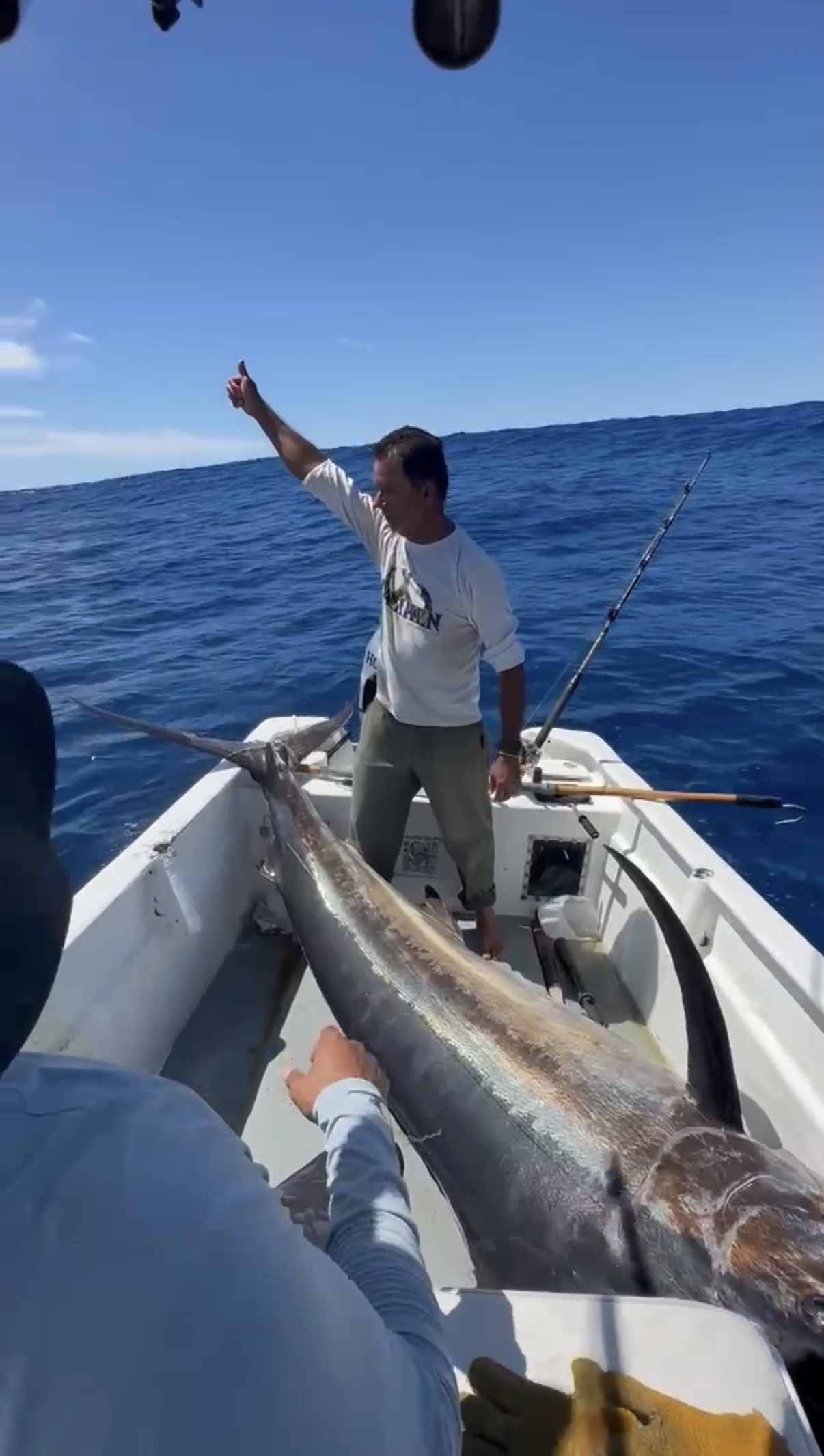
A blue marlin released boatside on a Daliken charter. The tournament era forced Cabo's charter industry to adopt professional standards for tackle, technique, and conservation practices that benefit every angler who books a trip today.
The Marina Era: From Mudflat to Mega-Yachts
The marina infrastructure of Los Cabos developed in two distinct waves. The first was the dredging of the original Cabo San Lucas marina between 1974 and 1975, which transformed what had been a dry mudflat with a landing strip and a scattering of cannery worker homes into a functional yacht and charter basin. The second wave came three decades later, with the opening of Puerto Los Cabos Marina in October 2007.
Cabo San Lucas Marina (1974 to 1975)
The original Cabo San Lucas Marina opened the iconic harbor that today welcomes cruise ships, yachts, and the bustling sportfishing fleet at the foot of Land's End. The marina became the working heart of Cabo San Lucas tourism. Boat slips, fuel docks, restaurants, and the iconic glass-bottom boat operators all developed around the basin. For decades, this was the only major marina in Los Cabos.
Puerto Los Cabos Marina
Located in San Jose del Cabo adjacent to the estuary, Puerto Los Cabos Marina was developed by Grupo Questro under the leadership of Eduardo Sanchez-Navarro. The marina was conceived as part of a 2,000-acre master-planned community including hotels, golf courses, residential neighborhoods, and beach clubs.
The marina currently has 200 slips and accommodates yachts up to 250 feet in length. It includes a full-service boatyard, mega-yacht concierge services, fuel docks, and supporting hospitality. Eventually planned to grow to 420 slips, it is positioned as one of the largest marinas in Mexico.
Puerto Los Cabos Marina shifted the geographic center of gravity of Los Cabos sportfishing. Many serious anglers now base out of San Jose del Cabo rather than Cabo San Lucas, taking advantage of shorter runs to Gordo Banks, Iman Bank, and other productive nearshore zones in the Sea of Cortez.
Why two marinas matter
The development of Puerto Los Cabos Marina gave anglers a meaningful choice. Cabo San Lucas Marina offers nightlife, restaurants, and proximity to the Pacific side. Puerto Los Cabos offers shorter access to the productive Gordo Banks zone (just 8 to 12 miles offshore), a calmer Sea of Cortez environment, and a quieter, more boutique sportfishing experience. Daliken Sportfishing operates out of Puerto Los Cabos Marina specifically for this geographic and experiential advantage.
Marine Group Boat Works
In 2009, Marine Group Boat Works broke ground on a major boatyard at Puerto Los Cabos Marina, an extension of their San Diego Bay operations. This added a layer of technical infrastructure to the region: serious yachts could now be hauled, refit, repaired, and stored locally rather than returning to Southern California or San Diego. The presence of this facility further established Los Cabos as a serious destination for the global yacht community.
Complete Cabo Sportfishing Timeline
The key dates, decisions, and figures that shaped Los Cabos sportfishing from pre-European times to the present day.
Indigenous Pericu people fish the southern Baja waters for over 10,000 years.
Hernan Cortes lands May 3 at what he names Bahia de Santa Cruz.
Mission San Jose del Cabo established by Jesuit missionaries.
IGFA Hall of Fame author Zane Grey publishes accounts of Cabo's extraordinary yellowfin fishing.
John Steinbeck and Ed Ricketts' Sea of Cortez book published, broadening American awareness.
Ray Cannon starts his 30-year career writing about Baja sportfishing.
Abelardo "Rod" Rodriguez opens Baja's first luxury fishing resort across from La Paz.
Rodriguez opens 15-room Palmilla, accessible only by plane or yacht.
December 1957 construction starts on the 1,000-mile paved road from Tijuana to Cabo.
Original Hotel Hacienda opens on Medano Beach.
Sunset Books publishes the coffee-table classic that brings the first wave of big-spending tourists.
The highway opens, ending Los Cabos isolation from mainland Mexico.
The original marina basin is dredged from sandy flats.
Los Cabos International Airport in San Jose del Cabo expands. Ray Cannon dies June 25.
Bob Bisbee Senior launches the tournament with 6 teams and $10,000 purse.
September 1993 hurricane causes widespread Cabo damage, leading to stronger building codes.
$4,165,960 paid out at Bisbee's Black and Blue, one of the largest payouts in sportfishing history.
October 2007: 200-slip marina opens in San Jose del Cabo, developed by Grupo Questro.
Hotel Solmar founder and "Father of Cabo Sportfishing" dies October 10 at age 83.
Los Cabos is recognized among the top three sportfishing destinations on Earth.
Cabo Today: Where Daliken Fits in the Legacy
The Los Cabos that visitors experience today is the cumulative product of every era covered in this history. The marina infrastructure exists because of 1974 and 2007 dredging projects. The international airport supports modern tourism because of the 1977 expansion. The tournament culture exists because of Bob Bisbee's 1981 decision. The world-class reputation exists because Ray Cannon, Zane Grey, John Steinbeck, and other writers told the world about these waters decades before the infrastructure was ready.
The modern fleet
The contemporary Los Cabos charter fleet operates from two main bases: Cabo San Lucas Marina and Puerto Los Cabos Marina. Combined, the two marinas host hundreds of charter operators ranging from large fleet companies to small family-owned operations. Boat types range from 22-foot super pangas to 100-foot sport yachts. Daily, throughout the year, hundreds of boats head out before dawn carrying anglers chasing the same species that have drawn visitors since Zane Grey's time.
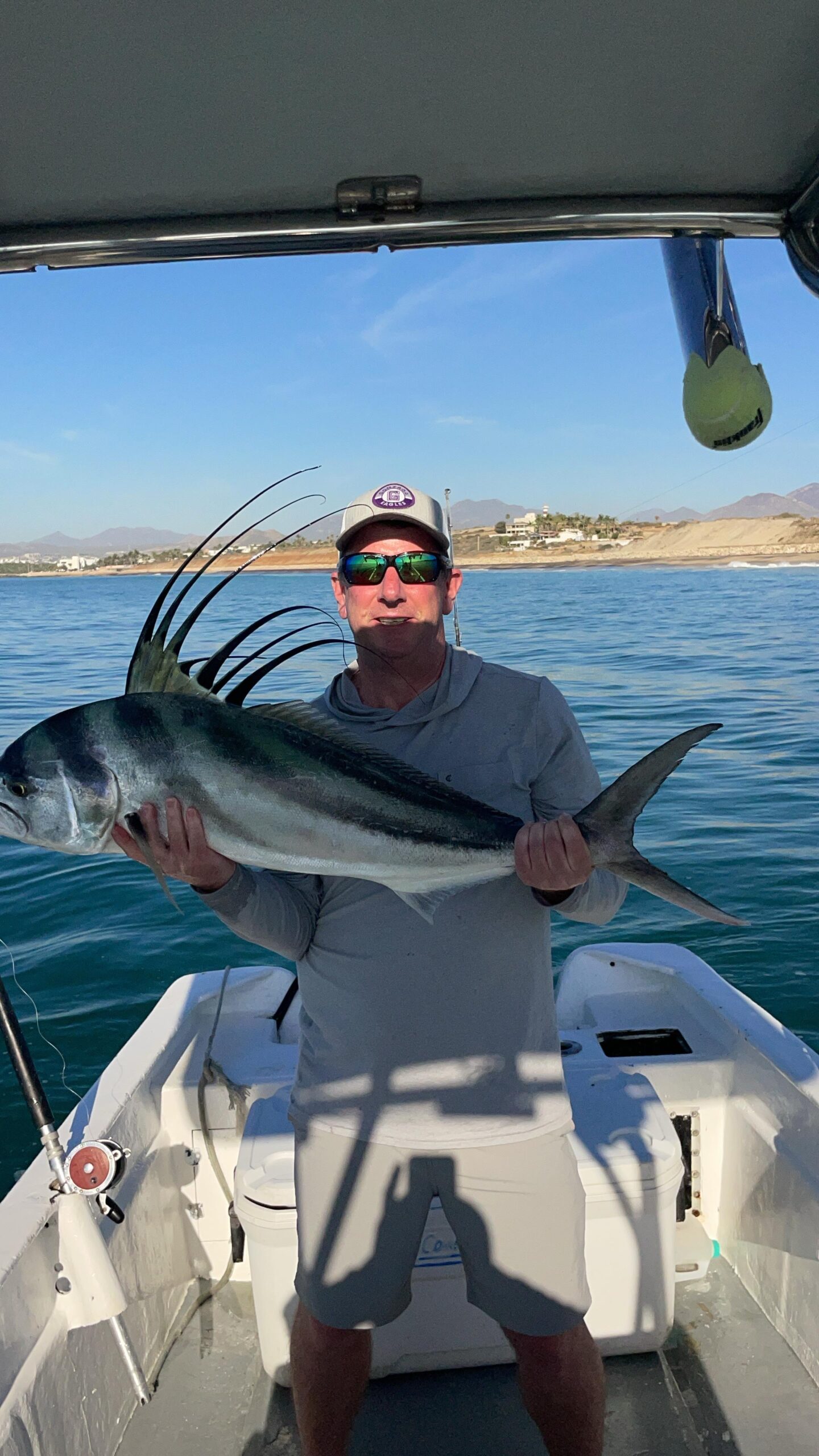
Captain Pancho and the Daliken crew at Puerto Los Cabos Marina. Each modern Cabo captain represents the continuation of a regional sportfishing tradition that runs through every chapter of this history.
Daliken's place in the story
Daliken Sportfishing operates out of Puerto Los Cabos Marina with a fleet of pangas and cruisers including the 23-foot Super Panga, 26-foot Super Panga, and 28-foot Habanero. The operation reflects the values that built Cabo's sportfishing reputation: deep regional knowledge, professional captains, modern equipment, transparent pricing, and conservation-minded practices including circle hooks and catch-and-release for billfish. We are one of many operators continuing the legacy these pioneers established.
What the legacy means for visiting anglers
The history matters because it shapes what visitors experience today. When you book a Cabo charter, you are not just buying a day on the water. You are buying access to a regional sportfishing tradition built across centuries: the same waters that supported Pericu fishermen, that drew Zane Grey, that inspired Ray Cannon, that built Bisbee's, that justified Puerto Los Cabos Marina. The hours you spend on the water connect you to that lineage.
Every Daliken charter is run with awareness that we are part of a much longer story. We use circle hooks for billfish conservation. We support catch-and-release where appropriate. We work to maintain the regional fishery health that made Cabo a world-class destination, so the next generation of anglers will find the same waters our generation enjoyed. Book a Daliken charter and join the tradition.
Cabo Sportfishing History FAQ
Who is considered the father of Cabo San Lucas sportfishing?
When did Bisbee's Black and Blue Tournament begin?
When was the Transpeninsular Highway completed?
Did Bing Crosby and John Wayne really visit Cabo?
Who built the first hotels in Los Cabos?
What is Ray Cannon's book "The Sea of Cortez"?
When did Puerto Los Cabos Marina open?
What was Cabo like before tourism?
How long have people fished the Sea of Cortez?
What hurricanes have affected Cabo's sportfishing industry?
- BDOutdoors - "Cabo San Lucas Father of Sportfishing" feature on Don Luis Bulnes Molleda
- Old Cabo / Los Cabos Pioneers historical archives - founders and hotelier profiles
- Discover Baja Travel Club - "Abelardo Rod Rodriguez: The Premier Hotelier of Baja Sur"
- Bisbee's Black and Blue Tournament official history and records
- Marine Group Boat Works - Puerto Los Cabos Marina facility documentation
- Sunset Books - Ray Cannon, The Sea of Cortez (1966 first printing)
- John Steinbeck and Ed Ricketts - Sea of Cortez (1941, original publication)
- Mexicofile / Rancho Buena Vista historical documentation
- FONATUR (Fondo Nacional de Fomento al Turismo) regional development records
- Daliken Sportfishing operational history and Puerto Los Cabos Marina base context
Continue the Tradition
Book a Daliken charter and join the lineage that runs from the Pericu fishermen of 10,000 years ago through Ray Cannon and the pioneers of the modern era to today's professional Cabo charter fleet.