
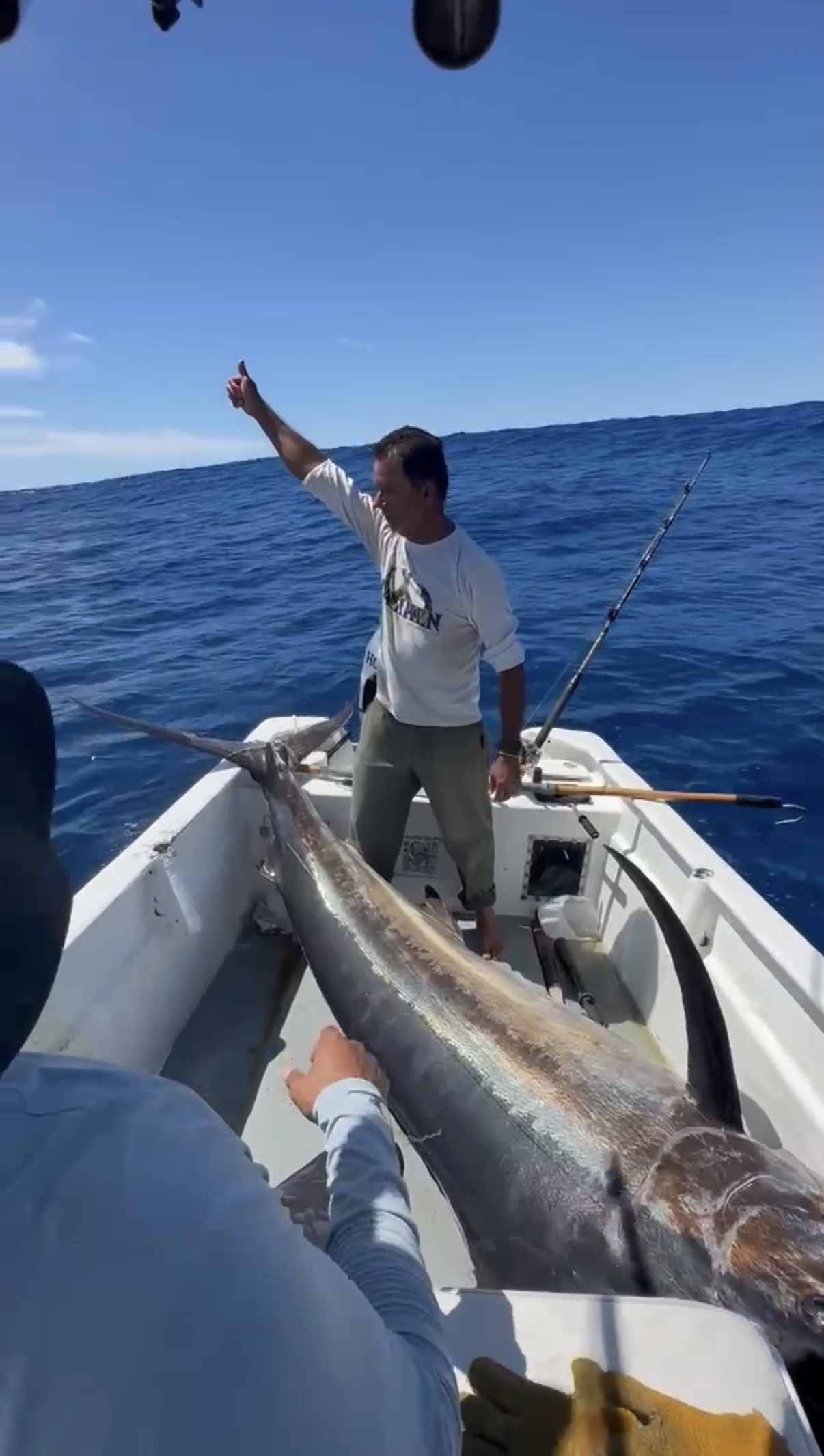
Circle Hooks
for Billfish
A circle hook is a fishing hook with its point bent in a near-perfect circle back toward the shank. It looks small and innocuous. It also represents the single most important conservation advance in billfish sportfishing in the past 30 years, with peer-reviewed studies showing it can reduce post-release mortality by 50% or more compared to traditional J-hooks.
What Is a Circle Hook?
A circle hook is a hook design where the point is bent inward toward the shank in a near-circular shape, rather than running parallel to the shank as in a traditional J-hook. This geometry causes the hook to slide out of soft tissue (throat, stomach, gills) and rotate to set in the corner of the jaw (the maxillary articulation) when the angler applies steady tension.
The defining feature
The point of a circle hook curves back toward the shank, often crossing the line of the shank when viewed from the side. This is the geometry that causes the hook to fail to grab tissue it slides past, and to succeed only in catching the jaw corner. The result is a hookup that is both more reliable when set properly and dramatically less damaging to the fish.
Why this matters for billfish
Billfish (marlin, sailfish, spearfish) feed by engulfing baitfish whole. They often swallow the bait deep before the angler can react. With J-hooks, this means the hook sets in the throat or stomach, causing catastrophic internal damage. With circle hooks, the hook slides past these vital areas and sets only when it reaches the jaw corner during the fight. The fish lives. The angler still gets the catch. Everyone wins, including the next angler who catches the same fish a year later.
Every natural bait rig deployed from a Daliken boat uses circle hooks. No exceptions for any client, regardless of preference. This is not a recommendation, it is a hard policy, because the data is conclusive.
The Circle Hook
Revolution
The story of how circle hooks went from obscure commercial fishing gear to the standard for billfish recreational fishing involves a Guatemala-based charter captain, a major fleet owner, and a Florida sailfish scientist whose data changed the industry. The transition took roughly two decades and is one of the most successful conservation interventions in modern sportfishing history.
The Ron Hamlin moment, 1999
Captain Ron Hamlin had just accepted The Billfish Foundation's annual release award for catching 546 Pacific sailfish in a single season, all on J-hooks. While accepting the award, he made an announcement that surprised the room: he was switching his entire operation to circle hooks. He had grown tired of watching gut-hooked billfish bleed out. The data he had quietly collected from his own boat showed circle hooks caught more fish than J-hooks, not fewer.
Tim Choate and Artmarina
Tim Choate, owner of the Artmarina fleet of charter boats, mandated circle hooks across all five of his vessels even before science had formally proven their conservation benefits. His operational data confirmed Hamlin's experience: catch rates were equal or better, and billfish swam away alive.
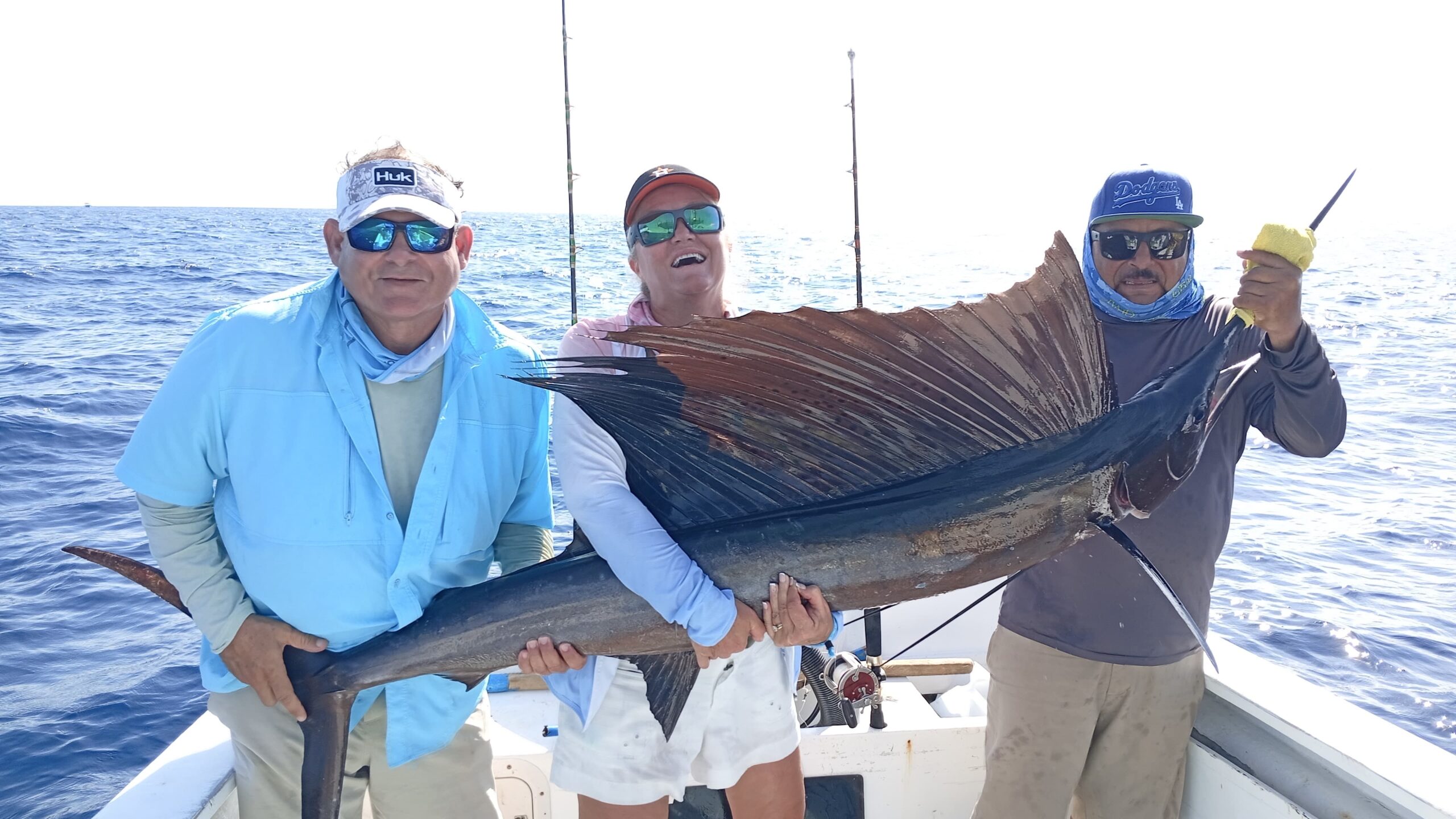
The Guatemala data
Hamlin's Guatemala operation produced the early data that built the case. Out of 461 sailfish bites in one comparison study, anglers hooked 360 fish. Using equal numbers of each hook type, J-hooks produced 125 caught-and-released fish, while circle hooks produced 235. Of the 235 circle-hook fish released, only 14 showed any bleeding (6 severe). Of the 125 J-hook fish released, 71 showed bleeding (32 severe). The conclusion: sailfish caught on J-hooks were 21 times more likely to suffer hook-related bleeding, and possible death, than fish caught on circle hooks.
What the Science
Actually Says
The case for circle hooks is not based on anecdote or marketing. It is built on more than two decades of peer-reviewed research using pop-up satellite archival tags (PSATs), controlled comparative studies, and systematic meta-analyses across multiple billfish species in multiple oceans.
The Graves & Horodysky synthesis
Researchers John Graves and Andrij Horodysky, working through the Virginia Institute of Marine Science (VIMS) and with NMFS funding, conducted what remains the most cited synthesis of circle hook conservation benefits in multispecies billfish recreational fisheries. Their work analyzed blue marlin post-release survival using PSAT technology and concluded that circle hooks deliver asymmetric conservation benefits: significant reductions in deep-hooking, bleeding, and post-release mortality across most billfish species.

The Serafy 2009 systematic review
Serafy et al. (2009) published a systematic review of hook effects on non-target billfish species in pelagic commercial and recreational fisheries across both Atlantic and Pacific Oceans. The review found significant mortality reductions with circle hooks for four species:
- White marlin: circle hooks 0-48% mortality, J-hooks 35-60%
- Blue marlin: circle hooks 53%, J-hooks 70%
- Sailfish: circle hooks 33%, J-hooks 73%
- Striped marlin: comparable mortality reduction patterns
The Reinhardt 2018 meta-analysis
Reinhardt et al. (2018) published an updated meta-analysis in the journal Fish and Fisheries reviewing circle hook performance across multiple species. The study found that 12 species, including most billfish, showed significantly lower at-vessel mortality on circle hooks compared to J-hooks. The analysis confirmed the conservation case while also documenting nuances: sailfish catch rates actually increase on circle hooks, while a few species (striped marlin, shortbill spearfish) showed reduced catch rates in certain conditions.
Circle Hooks
vs J-Hooks for Billfish
The comparison below summarizes peer-reviewed findings across multiple studies. Note that catch rate effects vary by species, technique, and conditions, but the conservation benefits are consistent.
The "catch rate" myth
The most common objection to circle hooks among traditionalists is that they catch fewer fish. The data does not support this for billfish. Hamlin's Guatemala data showed circle hooks produced almost twice as many catches as J-hooks (235 vs 125 in equal comparison). Recent meta-analyses confirm that for most billfish species, circle hook catch rates equal or exceed J-hook rates when proper technique is used. The exceptions (striped marlin in some conditions) are species-specific and well documented.
When J-hooks make sense (rare cases)
For some non-billfish meat species in certain rigging styles, J-hooks may remain practical. For artificial lures (Ilander/jet head/big-game lures) trolled at high speed, the hook gets to set in the jaw regardless of design. But for natural bait fishing of any billfish species, the case for circle hooks is closed and has been for at least a decade.
Circle Hook
Regulations
Circle hook requirements vary by jurisdiction, fishery, and bait type. Understanding the regulatory landscape helps anglers comply legally and shows why responsible operators voluntarily exceed minimum requirements.
United States: NMFS billfish tournament rule (2008)
The US National Marine Fisheries Service announced a proposed rule in 2006 and finalized it in 2008. The rule requires circle hooks to be used in US Atlantic Highly Migratory Species billfish tournaments when fishing with natural baits, including live or dead baits, and combination baits like the Ilander-and-ballyhoo combination commonly used for marlin trolling. The rule does not apply to artificial lures alone.
Mexico (CONAPESCA): no mandatory rule
Mexico's CONAPESCA does not currently require circle hooks by federal regulation. However, all major billfish tournaments held in Mexico (Bisbee's Black & Blue, Los Cabos Billfish Tournament, IGY, and others) require circle hooks in their tournament rules when natural baits are used. Daliken Sportfishing follows tournament-standard circle hook practice on all charters as a voluntary conservation commitment.
International tournament rules
Most major international billfish tournaments and circuits require circle hooks with natural baits. This includes the IGFA Offshore World Championship, the Los Cabos circuit, Costa Rica tournaments, Guatemala tournaments, and Pacific Coast circuits. Tournament rules typically specify minimum hook gap, non-offset configuration, and inline (non-rotating) shank requirements.
The IGFA position
The International Game Fish Association strongly recommends circle hooks for all natural bait billfish fishing. IGFA tournament rules have required circle hooks for years and the organization actively educates anglers on proper technique. IGFA-certified line-class records caught on circle hooks are explicitly recognized.
The legal minimum is the bar. The industry standard for serious operators is voluntary use of circle hooks on every natural bait rig, every trip, regardless of whether tournament rules apply. This is the position Daliken takes and the position we recommend all anglers expect from any charter they book.
How to Fish Circle Hooks
for Billfish
Circle hooks fail when fished like J-hooks. The technique that maximizes their conservation benefit and catch rate is fundamentally different from traditional hook-setting. Understanding this is the difference between dropping fish and landing them cleanly.
Do Not Strike Hard
The cardinal rule. A hard strike with a circle hook pulls the hook straight out of the fish's mouth before it can rotate and set. Apply steady tension instead.
Let the Fish Run
When a billfish takes natural bait, allow drop-back. The fish needs time to turn the bait and start swimming away with it. Reel-set or strip-set, do not hook-set.
Apply Steady Pressure
As the fish moves away, engage the reel and apply consistent rod pressure. The hook will slide along the inside of the mouth, exit at the jaw corner, and set itself.
The "feed and reel" technique
The most reliable circle hook technique for billfish on natural baits is called "feed and reel." When the fish takes the bait, the captain or angler allows the fish to swim with it (free spool or light drag) for a count of 3-5 seconds while the fish positions and swallows the bait. Then the reel is engaged smoothly to maximum drag, and the rod is loaded by steady pressure. The hook sets in the jaw corner naturally as the line comes tight. No hook-set strike is needed or wanted.
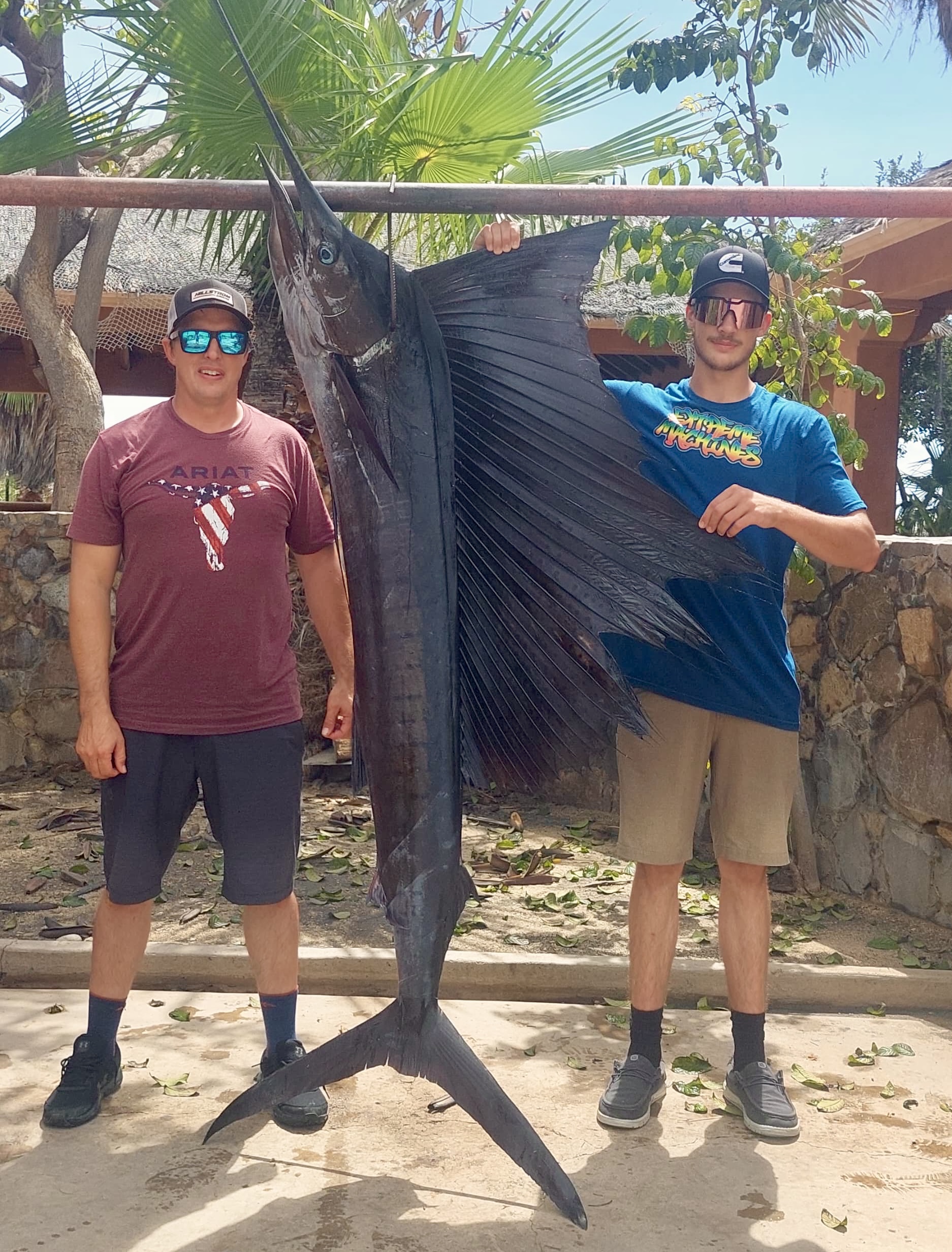
Kite fishing technique
When kite-fishing with live baits, the circle hook technique is similar but the drop-back is built into the rig. The line is held by a clip, and when a billfish takes the bait, the line pops free from the clip and the angler engages the reel as the fish turns away. This is one of the most effective techniques in modern billfish sportfishing.
What our captains coach
On every Daliken charter, when a billfish bite occurs, the captain or mate will call instructions: "let it go, let it go, now reel." Following these instructions, especially the "let it go" portion before reeling, is what produces clean jaw-corner hookups. Anglers who insist on hard hook-sets will drop fish and waste opportunities.
Circle Hook Sizes
and Brands for Billfish
Not all circle hooks are equal. Hook size, gap, offset configuration, point quality, and material all affect performance. The following are general guidelines used by serious billfish operations.
Size guidelines by species and bait
- Sailfish, live bait (mullet, sardines): 7/0 to 9/0 circle hooks
- Striped marlin, live bait: 9/0 to 11/0 circle hooks
- Blue marlin, dead bait (ballyhoo): 10/0 to 14/0 circle hooks
- Blue marlin, live bait (skipjack, bonito): 12/0 to 16/0 circle hooks
- Combination baits (Ilander+ballyhoo): 11/0 to 13/0 circle hooks
Configuration requirements
- Non-offset (inline): The point should be in line with the shank, not bent sideways. Most tournament rules require non-offset
- Black or stainless: Both work; black/non-galvanized typically dissolve faster if a hook is left in the fish
- Heavy gauge wire: Required for billfish; thin wire bends or breaks
- Sharp point: Essential; chemically sharpened or sharpened by hand before use
Brands commonly used in professional billfish operations
- Mustad: Demon Perfect Circle, classic and widely tested
- Eagle Claw: Trokar TK4 and TK5 series, premium
- Owner: SSW Cutting Point and Mutu Light circles
- VMC: Tournament Circle Hook series
- Daiichi: D85Z heavy duty circles
Daliken charters carry Mustad and Owner circle hooks in size ranges appropriate to expected target species and bait types. All hooks are inspected and sharpened before each trip. Rigging is done with the proper terminal tackle to ensure the hook can perform as designed.
Common Circle Hook
Mistakes
Most reports of "circle hooks don't work" trace back to one of the following mistakes. Avoid these and circle hooks will perform as the science predicts.
Mistake 1: Hard hook-set
The most common mistake. Anglers conditioned by J-hook fishing reflexively set the hook hard when they feel a bite. This pulls the circle hook straight out of the mouth before it can rotate. Fish dropped, frustrated angler, blame on the hook design. Solution: train yourself to reel, not strike.
Mistake 2: Inadequate drop-back time
If the angler engages the reel the moment a fish touches the bait, the fish has not had time to swallow and turn. The hook never gets the chance to slide to the jaw corner. Allow drop-back, even when it feels uncomfortably long. The fish needs to move.
Mistake 3: Wrong hook size
A circle hook too small for the bait will get swallowed deep along with the bait. A circle hook too large may not penetrate properly. Match hook size to bait size and target species. When in doubt, slightly larger is safer than slightly smaller.
Mistake 4: Offset (kirbed) circle hooks
Offset circle hooks have the point bent sideways from the shank. These behave more like J-hooks and partially defeat the conservation purpose. They also fail tournament rules. Use only non-offset (inline) circles for billfish.
Mistake 5: Dull point
Circle hook geometry already requires more force to penetrate compared to a J-hook because the hook is twisting as it sets. A dull point compounds this and produces failed hookups. Sharpen or replace before every trip.
Mistake 6: Light drag
Once the fish has the bait and is moving, light drag means the line never comes tight enough for the hook to set in the jaw corner. Engage to full strike drag once the drop-back is complete.
Beyond the Hook
Complete Billfish Survival
A circle hook is necessary but not sufficient for maximum billfish survival. NMFS-funded research has demonstrated that other factors, particularly air exposure and handling, also significantly affect post-release mortality. Conservation-minded operators address all of them.
Keep the fish in the water
Research by Marcek, Goldsmith, and others (PSAT-based) demonstrated that air exposure greatly increases post-release mortality rates. White marlin brought on deck for one, three, or five minutes showed measurable mortality increases at each duration. The conservation-optimal practice is to keep the fish in the water during photos and tagging, releasing it boatside without ever lifting it from the sea.
Minimize fight time
Long fights exhaust the fish and produce lactic acid buildup that compromises post-release survival. Use appropriate tackle for the species (not undersized) and apply maximum pressure consistent with line and leader strength. A 30-minute marlin fight is conservation-positive. A 90-minute marlin fight on undersized tackle is not.
Proper revival technique
If a billfish has been fought hard and seems exhausted at the boat, hold it gently boatside (leader still attached) and slowly move forward with the boat in gear. This forces oxygenated water across the gills. Continue until the fish demonstrably revives and swims off under its own power. Releasing an exhausted fish that does not revive is releasing a dead fish.
What we coach on every release
- Keep the fish in the water; no deck exposure unless absolutely required
- Photos with the fish boatside, leader-held, fish supported by water
- Use of dehookers, not lifting tools, for hook removal
- If hook removal would cause more damage than leaving it, cut the leader close to the hook (especially with non-stainless hooks that will dissolve)
- Revival in current/water flow before final release
- Visual confirmation that the fish swims off strongly
Circle Hook Releases
on Daliken Charters
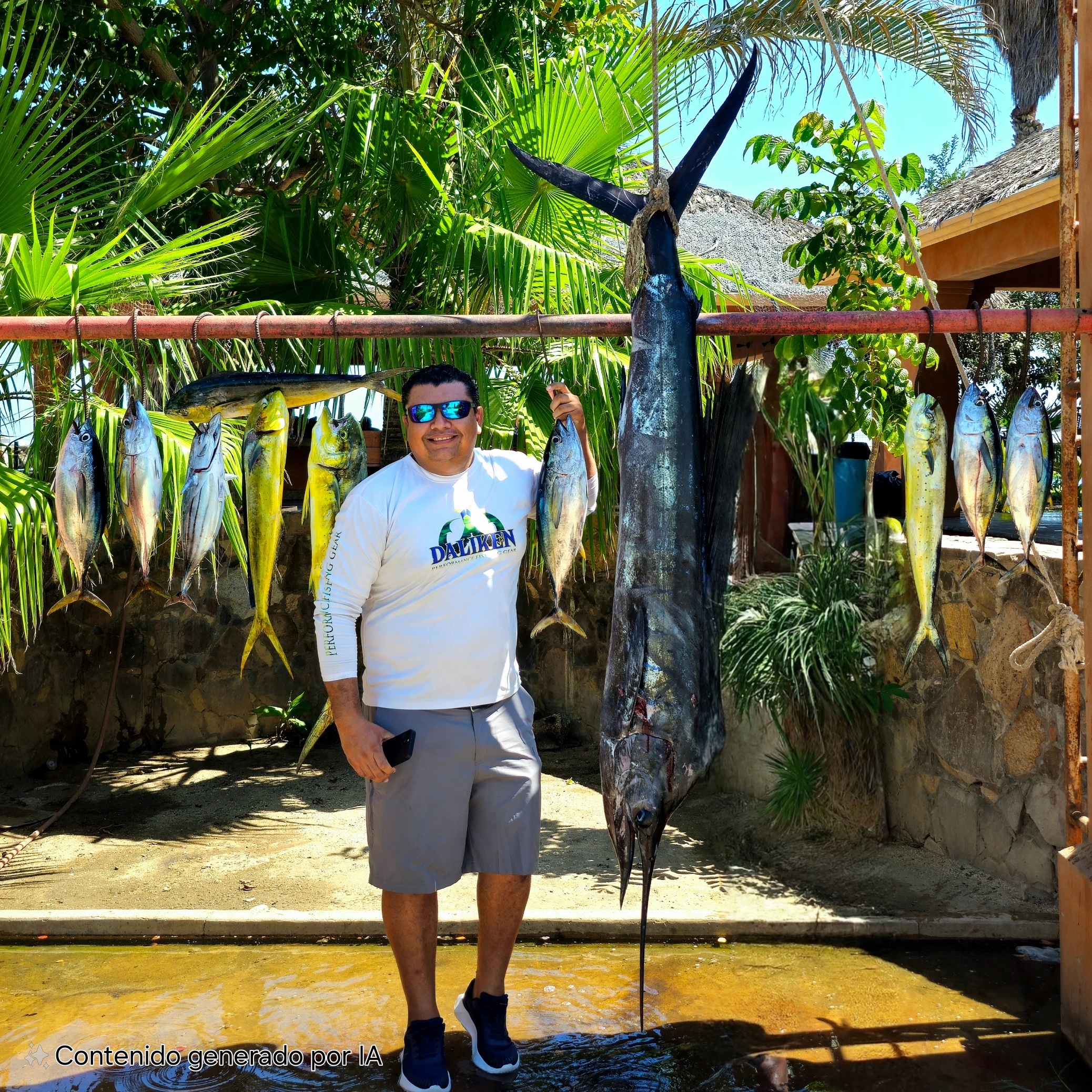
Real billfish releases from Daliken Sportfishing trips. Every fish hooked on circle hooks in the corner of the jaw, released boatside without air exposure, swimming off strong.
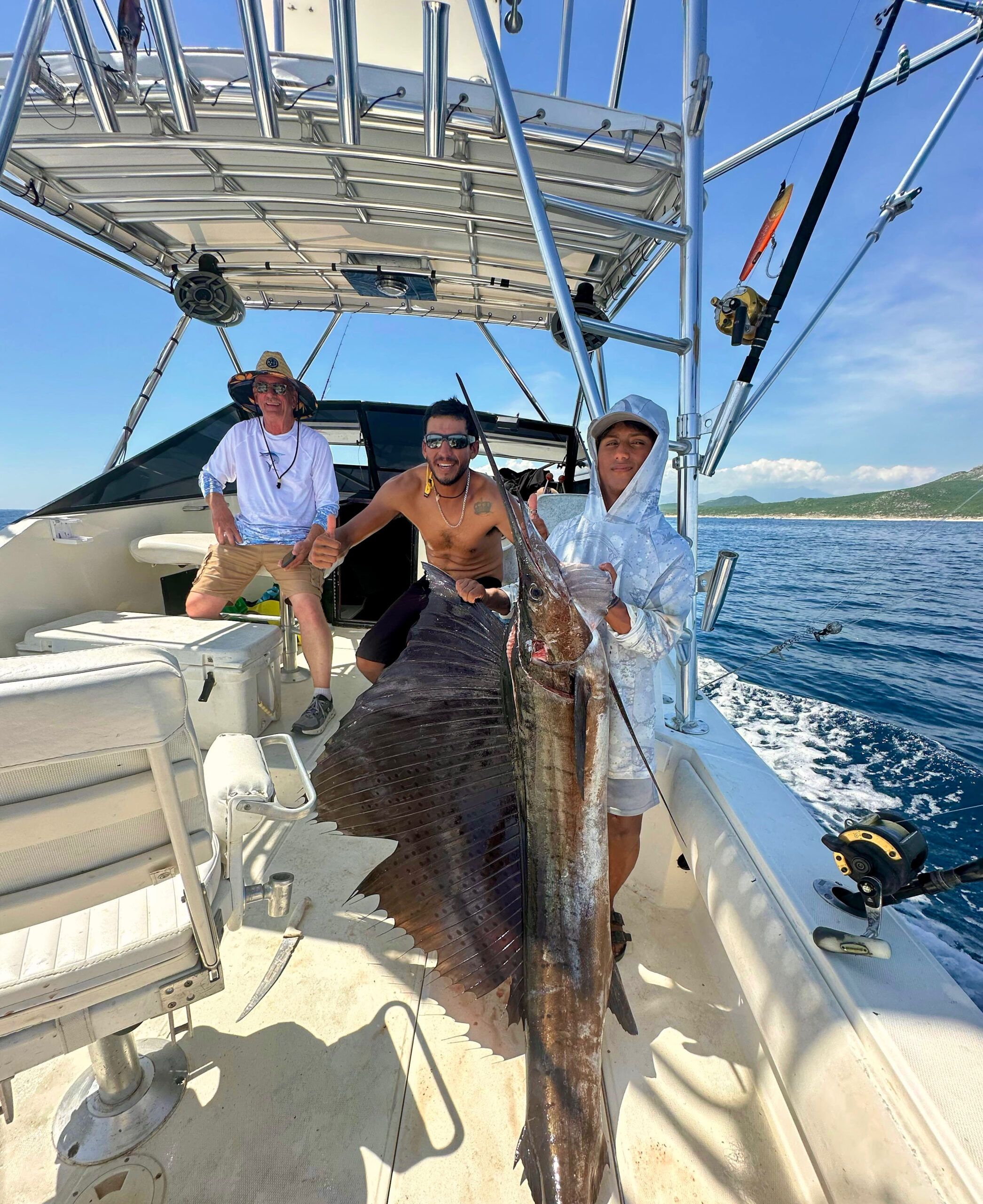
Circle Hooks Billfish
Frequently Asked Questions
What is a circle hook?+
Why use circle hooks for billfish?+
Are circle hooks required by law in Mexico?+
When did NMFS require circle hooks in US tournaments?+
Do circle hooks catch fewer fish?+
How do you fish a circle hook properly?+
What size circle hook for marlin?+
Should I use offset or non-offset circle hooks?+
Does air exposure affect billfish survival?+
Does Daliken use circle hooks on all trips?+
- Graves, J.E. & Horodysky, A.Z. · "Asymmetric conservation benefits of circle hooks in multispecies billfish recreational fisheries" · NMFS Scientific Publications
- Serafy, J.E., Cooke, S.J., Diaz, G.A., et al. (2009) · Systematic review of hook effects on billfish · Conservation Evidence Database
- Reinhardt, J.F., et al. (2018) · Meta-analysis of circle vs J-hook performance · Fish and Fisheries journal
- Prince, E.D., Snodgrass, D., Orbesen, E.S. (2007) · "Circle hooks, J-hooks and drop-back time" · Fisheries Management and Ecology 14: 173-182
- Graves, J.E. et al. (2002) · First PSAT study of blue marlin post-release mortality off Bermuda
- Marlin Magazine · "The Circle Hook Revolution" and "Practice Like You Play" features
- The Billfish Foundation · tournament rules and release awards data
- National Marine Fisheries Service (NMFS) · 2007/2008 circle hook rule finalization for US Atlantic billfish tournaments
- International Game Fish Association (IGFA) · circle hook recommendations and tournament rules
Fish Billfish
the Right Way
Book a Daliken charter and fish with circle hooks, properly rigged, by captains who coach you through the right technique. Conservation and great fishing are the same thing on our boats.